
Derelomini
Palm Flower Weevils
Genus Guides
5- Derelomus
- Elaeidobius(palm-pollinating weevil)
- Hypoleschus
- Notolomus
- Phyllotrox
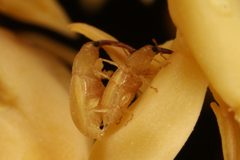
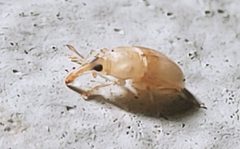
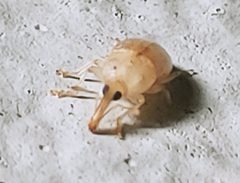
Derelomini is a tribe of flower weevils (Curculionidae: Curculioninae) commonly known as palm flower weevils. Members are associated with reproductive structures of plants, particularly inflorescences. The tribe includes with specialized pollination mutualisms with palms (Arecaceae) and other monocots, as well as genera associated with dicotyledonous plants. Genera include Derelomus, Elaeidobius, Hypoleschus, Notolomus, Phyllotrox, and several recently described genera including Ebenacobius, Cyclanthura, Ganglionus, and Staminodeus.
Pronunciation
How to pronounce Derelomini: //dɛˌrɛloʊˈmaɪnaɪ//
These audio files are automatically generated. While they are not always 100% accurate, they are a good starting point.
Identification
Tribe-level identification requires examination of genitalic and other morphological characters; members are small to medium-sized weevils with typical curculionid features including an elongated rostrum. within Derelomini are distinguished by combinations of characters including tibial armature, claw structure, convexity, forehead , and male genitalic . For example, Ebenacobius is diagnosed by protibiae with an mucro, free claws, eyes convex beyond contour in view, and a forehead furrow.
Images
Habitat
Primarily associated with plant reproductive structures, especially inflorescences. Members occur in: male inflorescences of palms (Arecaceae) including oil palm (Elaeis guineensis) and wax palms (Ceroxylon); flowers of dicotyledonous plants including Euclea (Ebenaceae); and inflorescences of Cyclanthaceae and Araceae (Anthurium).
Distribution
Afrotropical region including southern Africa; Neotropics; Peruvian Andes. Distribution varies by : Ebenacobius in southern Africa; Elaeidobius in Afrotropical region; Anchylorhynchus and Cyclanthura in Neotropics; Terioltes in Central and South America.
Host Associations
- Elaeis guineensis - breeding and feeding sitemale inflorescences; critical for pollen transportation and fruit set
- Ceroxylon quindiuense - breeding and feeding sitemale inflorescences of wax palm
- Euclea species - larval developmentflowers of Ebenaceae; at least two Ebenacobius
- Syagrus - ancestral common ancestor of Anchylorhynchus visited Syagrus flowers
- Arecaceae - pollination mutualismat least four of palms for Anchylorhynchus
- Anthurium - pollination and Araceae for Cyclanthura
- Asplundia - pollination and Cyclanthaceae for Cyclanthura
- Carludovica - pollination and Cyclanthaceae for Cyclanthura and Ganglionus
- Sphaeradenia - pollination and Cyclanthaceae for Cyclanthura
- Cyclanthus - pollination and Cyclanthaceae for Cyclanthura
Life Cycle
Larval development occurs within plant inflorescences. In Elaeidobius, activity in male oil palm inflorescences is critical for pollen transport. In Ebenacobius, larval stages develop in flowers of dicot plants. Anchylorhynchus engage in pollination with larvae developing in palm flowers or fruits.
Behavior
pollination mutualisms with palms and other plants: activity in inflorescences facilitates pollen transport while providing oviposition sites and larval food resources. This mutualistic relationship has been described as an emerging system for studying mutualism evolution.
Ecological Role
of economically important palms including oil palm (Elaeis guineensis) and wax palms; engaged in pollination mutualisms with Arecaceae, Cyclanthaceae, and Araceae. Potential role in floral herbivory for some lineages associated with dicotyledonous plants.
Human Relevance
Elaeidobius are critical of oil palm (Elaeis guineensis), an economically important crop for palm oil production. Their activity in male inflorescences is essential for pollen transportation and fruit set.
Similar Taxa
- other Curculioninae tribesDerelomini is distinguished within Curculioninae by specialized associations with plant reproductive structures and pollination mutualisms; other tribes lack this consistent pattern of inflorescence specialization
- Derelomini genera within Derelomini distinguished by morphological characters including tibial armature, claw structure, convexity, forehead , and male genitalic ; associations also differ geographically and phylogenetically
Sources and further reading
- BugGuide
- Wikipedia
- iNaturalist taxon
- NCBI Taxonomy
- Systematics of Cyclanthura gen. n., a new genus of Derelomini (Coleoptera: Curculionidae)
- Systematic revision and morphological phylogenetic analysis of Anchylorhynchus Schoenherr, 1836 (Coleoptera, Curculionidae: Derelomini)
- Ebenacobius Haran, a new southern African genus of flower weevils (Coleoptera: Curculioninae: Derelomini) associated with dicotyledonous plants
- Description and Phylogeny ofStaminodeus, a New Genus of Derelomini (Coleoptera: Curculionidae) Associated with Cyclanthaceae
- Revision of the palm-pollinating weevil genus Elaeidobius Kuschel, 1952 (Curculionidae, Curculioninae, Derelomini) with descriptions of two new species
- Nouvelle espèce de Terioltes Champion, 1903, du Palmier andin Ceroxylon quindiuense (H. Karst.) H. Wendl., au Pérou (Coleoptera, Curculionidae, Derelomini)
- <I>Ganglionus</I>, a New Genus of Derelomini (Coleoptera: Curculionidae) Associated with <I>Carludovica</I> (Cyclanthaceae)