Eurhinus magnificus
Gyllenhal, 1836
Jewel Weevil, Iridescent Weevil
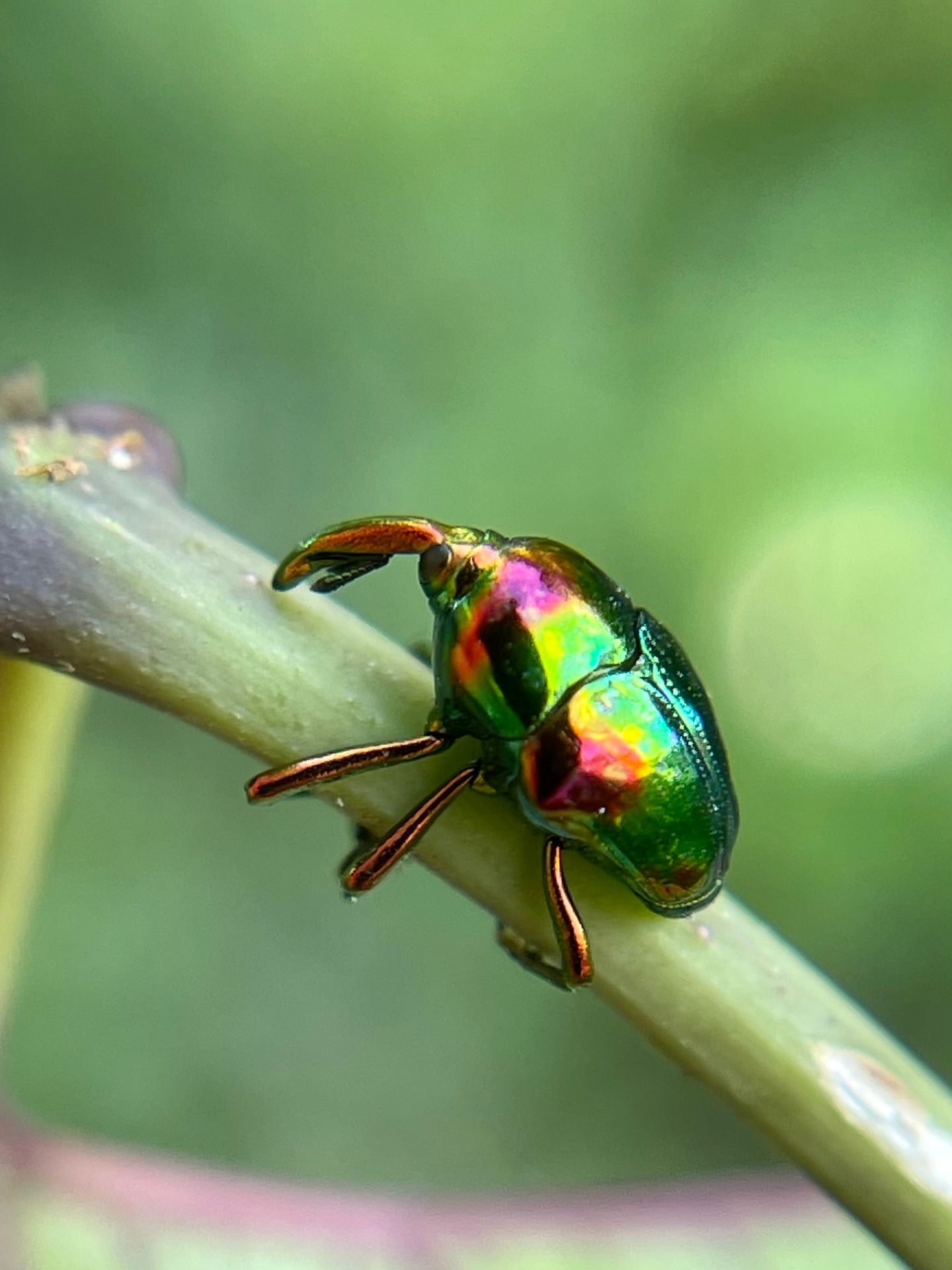
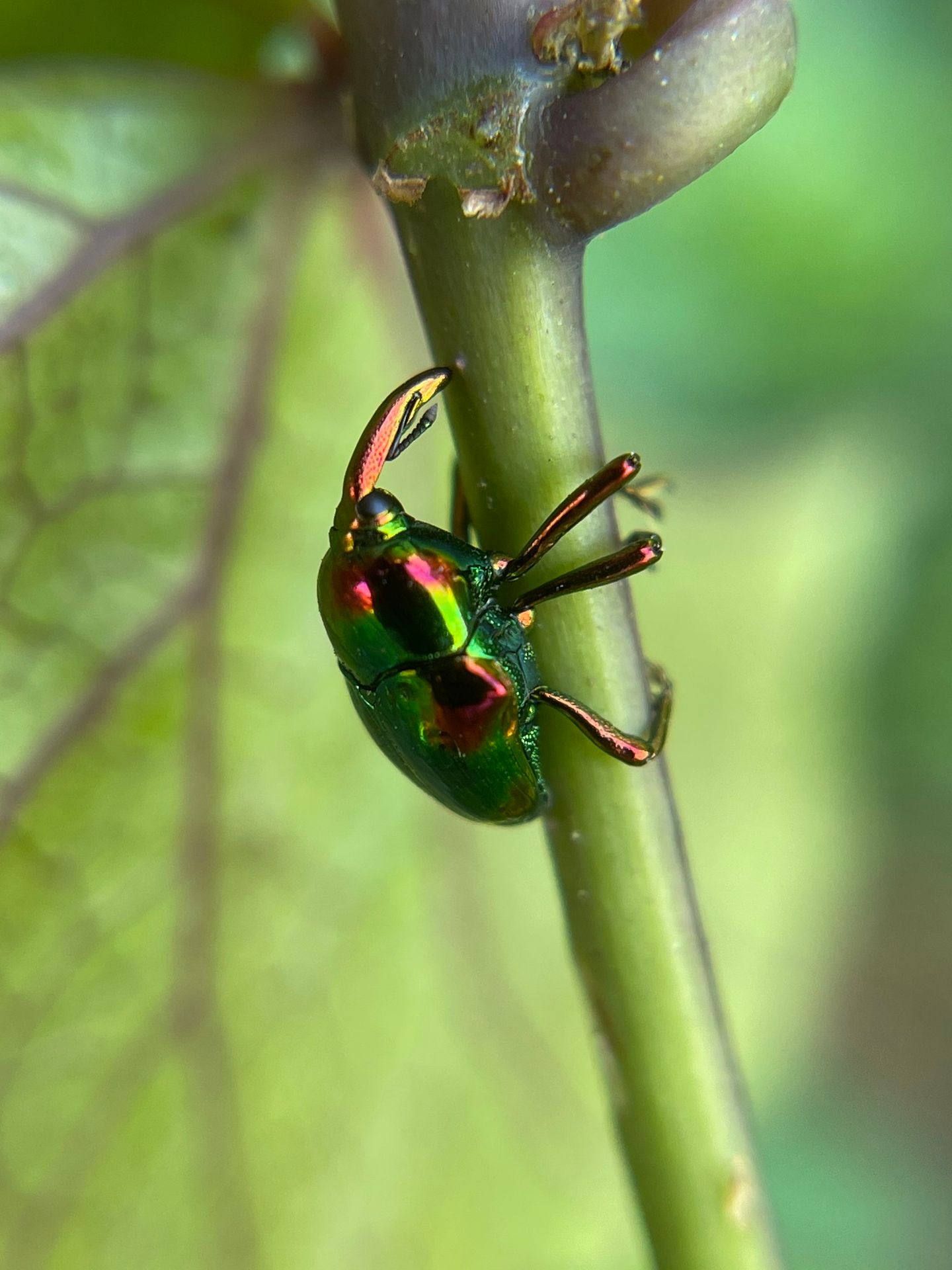
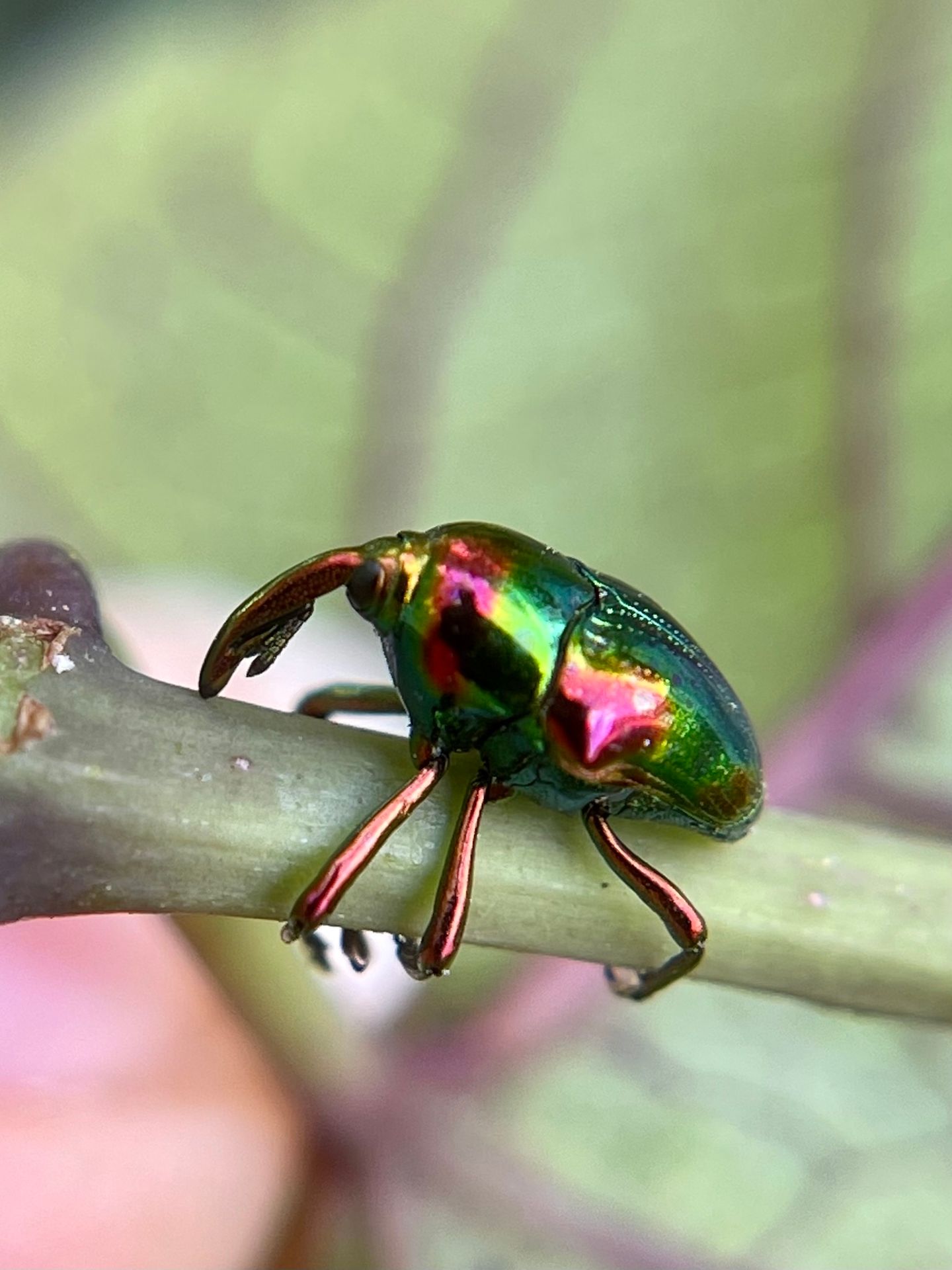
Eurhinus magnificus, commonly known as the jewel weevil, is a brilliantly colored weevil native to Central America. are small (5–6 mm long, 3–4 mm wide) with striking metallic blue-green bodies accented by metallic red- on the humeri, apex, pronotum, rostrum, and legs. The was first described by Leonard Gyllenhaal in 1836 and has been introduced to southern Florida, where it was first detected in 2002. It is a gall-forming herbivore whose larvae develop within stem galls on its primary plant, Cissus verticillata.
Pronunciation
How to pronounce Eurhinus magnificus: /juˈɹaɪnəs mæɡˈnɪfɪkəs/
These audio files are automatically generated. While they are not always 100% accurate, they are a good starting point.
Identification
Distinguished from other weevils by its small size (5–6 mm) and brilliant metallic coloration combining blue-green with red- accents. The metallic sheen and specific pattern of color distribution (red-copper on humeri, apex, pronotum, rostrum, and legs against blue-green body) is diagnostic. In Florida, it may be confused with other metallic weevils, but the specific color pattern and association with Cissus verticillata plants support identification.
Images
Appearance
are brilliantly colored with metallic blue-green bodies and metallic red- coloration on the humeri, apex, pronotum, rostrum, and legs. Body length is approximately 5–6 mm and width 3–4 mm. The elytra are smooth and highly reflective, contributing to the jewel-like appearance.
Habitat
Found in ornamental nurseries, citrus groves, roadside ditches, fence lines, and manicured gardens in its introduced Florida range. Native in Central America includes tropical and subtropical vegetation where plants occur.
Distribution
Native to Central America: Belize, Rica, Guatemala, Honduras, Mexico, Nicaragua, and Panama. Introduced to southern Florida (Broward and Miami-Dade counties), where it was first detected in 2002. The Florida introduction is presumed to have occurred through trade, possibly via banana shipments from Costa Rica.
Diet
Larvae feed on plant juices within galls they induce on plant stems. feed on host plant stems, with documented feeding on Cissus verticillata. Adults have been observed attacking grape cultivars (Vitis spp.) in greenhouse studies, but larval development does not occur on grapes.
Host Associations
- Cissus verticillata - primary Verified plant in Florida; all life stages collected from this plant. Larvae induce galls on stems.
- Vitis spp. - feeding only attacked grape cultivars in greenhouse studies, but larval development did not occur
- Vernonia spp. - suggested but unverifiedSuggested in literature but not confirmed by field studies
- Andira spp. - suggested but unverifiedSuggested in literature but not confirmed by field studies
- Mikania spp. - suggested but unverifiedSuggested in literature but not confirmed by field studies
Life Cycle
are laid singly in the succulent young subterminal portion of stems, typically one or two eggs between two nodes. Larvae pass through five instars, with gall formation apparent by the first to third instar. The gall increases in size until occurs within the gall. Field studies found considerable mortality from and , but no was detected.
Behavior
Larvae induce gall formation on plant stems, developing entirely within these protective structures. are and feed on host plant stems. The has been documented as a potential pest in ornamental and fruit crop settings.
Ecological Role
Gall-forming herbivore that modifies plant tissue for larval development. Serves as prey for and is susceptible to . Potential pest status in agricultural and ornamental settings due to gall formation and feeding damage.
Human Relevance
Considered a potential pest of ornamental plants and grape cultivars in Florida. feeding on grape stems can open wounds susceptible to fungal . Management concerns exist in nurseries and citrus groves where plants occur.
Similar Taxa
- Eurhinus adonisSimilar brilliant metallic green coloration and body form; distinguished by specific color pattern details and geographic distribution
- Other Baridinae weevilsShare general body plan and size, but lack the distinctive metallic blue-green and red- coloration of E. magnificus
Misconceptions
The 'green immigrant leaf weevil' has been applied to this , but this identification is possibly incorrect and should be treated with caution.
More Details
Taxonomic Nomenclature
The Eurhinus was involved in a significant nomenclatural issue. Originally described as Eurhin by Illiger in 1807, it was changed to Eurhinus by Schönherr in 1824. This created a homonym with Eurhinus Kirby 1819 (Apioninae), leading to complex taxonomic adjustments. The ICZN eventually preserved Schönherr's usage for stability.
Introduction History in Florida
First detected in Florida in 2002, with the first confirmed sighting on February 4, 2010 at the Conservancy of SW Florida Garden in Naples, followed by another sighting days later in Pinellas County. The introduction is suspected to be trade, particularly banana shipments from Rica.
Sources and further reading
- BugGuide
- Wikipedia
- GBIF taxonomy match
- iNaturalist taxon
- Catalogue of Life
- Curculionidae | Beetles In The Bush | Page 2
- Bibliography | Beetles In The Bush
- The Coleopterists Bulletin | Beetles In The Bush
- Weevil, Eurhinus magnificus Gyllenhal (Insecta: Coleoptera: Curculionidae)
- Life history and larval morphology of Eurhinus magnificus Gyllenhal (Coleoptera: Curculionidae), a new weevil to the United States