
Polydrusus formosus
(Mayer, 1779)
Green Immigrant Leaf Weevil
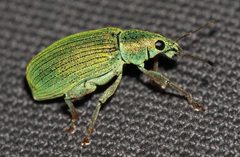
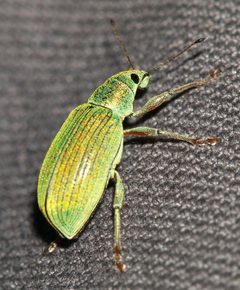
Polydrusus formosus is a small broad-nosed weevil in the Curculionidae, native to Europe and introduced to North America. are strikingly metallic green due to dense emerald covering the body. The is a documented pest of fruit trees and ornamental shrubs, feeding on young leaves and blossoms.
Pronunciation
How to pronounce Polydrusus formosus: /pɒlɪˈdruːsəs fɔːrˈmoʊsəs/
These audio files are automatically generated. While they are not always 100% accurate, they are a good starting point.
Identification
Metallic green coloration distinguishes it from most other Polydrusus , which tend toward brown or bronze tones. The short rostrum (broad-nosed) separates it from long-snouted weevils. Evident elytral and pale with dark club are consistent characters. Worn specimens may appear dark rather than green.
Images
Habitat
Woodland edges, orchards, and areas with fruit trees or shrubs. Associated with Corylus avellana, Quercus , and various cultivated fruit trees.
Distribution
Native to most of Europe; introduced and established in the including North America. Documented in Ireland since 2005.
Seasonality
active primarily April through August.
Diet
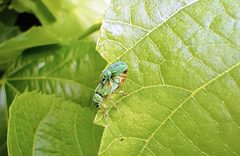
feed on young leaves and open blossoms of woody plants including hazel (Corylus avellana), oak (Quercus spp.), apple, pear, and cherry. Larvae feed on roots of plants in soil.
Host Associations
- Corylus avellana - feedingyoung leaves and blossoms
- Quercus - feedingyoung leaves
- Malus domestica - pestbuds, blossoms, shoots
- Pyrus - pestbuds, blossoms, shoots
- Prunus - pestbuds, blossoms, shoots
Life Cycle
laid in bark or leaves of plants. Larvae are soil-dwelling, growing to 7 mm, feeding on plant roots. Development completes in autumn; larvae overwinter and pupate in spring.
Human Relevance
Recognized agricultural and horticultural pest causing extensive damage to buds, blossoms, and shoots of fruit trees. Economic impact documented on apple, pear, and cherry.
Similar Taxa
- Other Polydrusus speciesMost are brown or bronze rather than metallic green; P. formosus is among the most vividly colored members of the .
- Phyllobius weevilsSome Phyllobius share green coloration but differ in antennal structure and elytral ; careful examination of and rostrum proportions required.
More Details
Scale abrasion
The brilliant green color is entirely dependent on intact . Specimens in collections or those that have experienced wear often appear dark brown or black, which can lead to misidentification.