
Pidonia
Mulsant, 1863
Species Guides
8- Pidonia aurata
- Pidonia densicollis
- Pidonia gnathoides
- Pidonia nitidicollis
- Pidonia quadrata
- Pidonia ruficollis(Stripe-legged Long-horned Beetle)
- Pidonia scripta
- Pidonia vibex(Yellow-collared Lepturine)
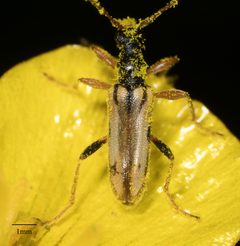
Pidonia is a of longhorn beetles in the Cerambycidae, Lepturinae. These beetles are typically small with black and yellow or orange coloration. Field observations indicate are frequently found on flowers, particularly those of Asteraceae and Malvaceae families. The genus occurs across North America and Eurasia, with inhabiting forested and woodland environments.


Pronunciation
How to pronounce Pidonia: //pɪˈdoʊ.ni.ə//
These audio files are automatically generated. While they are not always 100% accurate, they are a good starting point.
Identification
Members of Pidonia can be recognized by their small size, slender build, and distinctive black and yellow or orange color patterns. They belong to the lepturine group of cerambycids, characterized by relatively short compared to many longhorn beetles. Specific -level identification requires examination of detailed morphological features including antennal structure, pronotal shape, and elytral maculation patterns.
Images
Habitat
Forest edges, woodland clearings, and areas with abundant flowering vegetation. Observations indicate association with ponderosa pine forests and juniper-pinyon-oak woodlands in western North America.
Distribution
Widely distributed across the Northern Hemisphere. Records include North America (United States: Vermont; western states including Arizona, Utah, Nevada) and Eurasia (Norway, Sweden).
Seasonality
have been observed active in June in western North American localities, with activity coinciding with flowering periods of plants.
Host Associations
- Hymenopappus filifolius - flower visitation observed on flowers
- Sphaeralcea ambigua - flower visitation observed on flowers
Behavior
have been observed visiting flowers during daylight hours, suggesting nectar-feeding or pollen-collecting typical of lepturine cerambycids. activity on tree trunks has not been documented for this .
Ecological Role
flower visitation suggests potential role as . Larval is presumed to involve wood-boring in dead or dying woody vegetation, consistent with related lepturine , though direct observations are lacking.
Similar Taxa
- AmannusSimilar size and flower-visiting in western North American ; distinguished by different antennal and body proportions
- StictolepturaShared lepturine membership with similar color patterns; requires detailed examination of tarsal and antennal characters for separation
More Details
Taxonomic Note
The Pidonia has undergone taxonomic revision, with some North American formerly placed in this genus now assigned to other genera. Current classification follows modern phylogenetic treatments of Lepturinae.
Field Recognition
In field settings, Pidonia may be confused with other small black-and-yellow lepturines. The combination of small size (typically under 10 mm), slender form, and flower-associated in western montane is suggestive of this .