
Amannus
LeConte, 1858
Species Guides
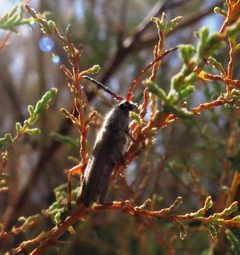
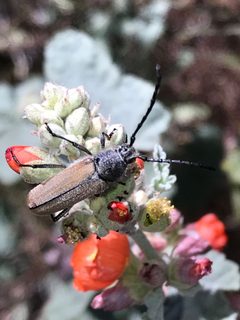
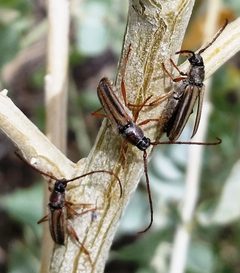
2Amannus is a small of longhorn beetles ( Cerambycidae) in the tribe Trachyderini. The genus contains three recognized : Amannus atriplicis (Texas), A. pectoralis, and A. vittiger. Amannus atriplicis has been documented developing as larvae in living branches of Atriplex canescens (fourwinged saltbush), with emerging from pupal within the plant tissue. The genus is poorly studied, with limited information available on most species.
Pronunciation
How to pronounce Amannus: /əˈmænəs/
These audio files are automatically generated. While they are not always 100% accurate, they are a good starting point.
Identification
Amannus are cerambycine longhorn beetles. Amannus atriplicis can be recognized by its association with Atriplex plants; are reddish-brown before hardening to darker coloration. The is distinguished from related trachyderine genera by genitalic and structural characters, though specific diagnostic features for field identification are not well documented in available literature.
Images
Habitat
Arid and semi-arid environments. Amannus atriplicis occurs in wetland and riparian areas where its plant Atriplex canescens (fourwinged saltbush) grows, including the Rio Bosque Wetland Park in Texas. Other ' preferences are not well documented.
Distribution
United States and northern Mexico. Amannus atriplicis is recorded from Texas; A. pectoralis and A. vittiger have broader distributions in western and southwestern North America. Precise range boundaries for most remain poorly defined.
Seasonality
have been observed in late May and early June. Larval development occurs within living plant branches, with in situ.
Host Associations
- Atriplex canescens - larval Fourwinged saltbush; larvae develop in living branches, creating packed -filled galleries
Life Cycle
Larvae bore into living branches of plants, creating galleries packed with . occurs within the branch in a pupal . emerge directly from the host plant. This development pattern has been documented for A. atriplicis; other presumably have similar wood-boring larval habits.
Behavior
are cryptic and rarely encountered in the field. They do not appear to be attracted to lights in significant numbers. The appears to be associated with living rather than dead wood, distinguishing it from many cerambycid larvae that develop in dead or dying material.
Ecological Role
As larvae, Amannus function as internal feeders in living woody plants, potentially acting as plant stressors or contributing to branch dieback. Their ecological role is not well studied due to the rarity of observations.
Similar Taxa
- Other TrachyderiniSimilar general body form; Amannus distinguished by association with Atriplex and internal larval development in living wood rather than dead wood
- Cerambycinae (general)Many cerambycines share elongated body form and ; Amannus are typically smaller and more cryptic than the more conspicuously colored members of the
More Details
Taxonomic history
The was established by LeConte in 1858 with the description of A. pectoralis and A. vittiger. Amannus atriplicis was described much later by Linsley in 1957. The genus has received limited taxonomic attention since its original description.
Collection challenges
Amannus are among the more difficult cerambycids to collect due to their cryptic habits and association with living plant tissue. are rarely encountered at lights or on vegetation, and detection typically requires destructive sampling of host branches or rearing from collected wood. The 2022 collecting trip report documents one of the few successful field encounters with A. atriplicis, achieved by cutting into living Atriplex branches showing evidence of larval galleries.