
Brachysomida
Casey, 1913
Species Guides
6- Brachysomida atra
- Brachysomida bivittata(Double-lined Longhorn Beetle)
- Brachysomida californica
- Brachysomida nigripennis(Black-winged Long-horned Beetle)
- Brachysomida rugicollis
- Brachysomida vittigera
Brachysomida is a of longhorn beetles (Cerambycidae) in the Lepturinae, tribe Rhagiini. It contains five described distributed in North America, including B. atra, B. bivittata, B. californica, B. rugicollis, and B. vittigera. The genus was established by Casey in 1913. Species in this genus are associated with forested and are part of the flower-visiting longhorn beetle fauna.
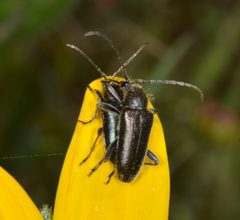
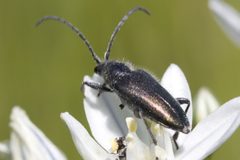
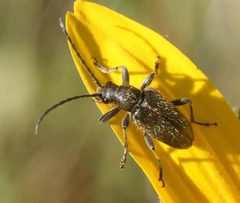
Pronunciation
How to pronounce Brachysomida: /ˌbræ.kɪˈsoʊ.mɪ.də/
These audio files are automatically generated. While they are not always 100% accurate, they are a good starting point.
Identification
Members of Brachysomida can be distinguished from related Rhagiini by their compact body form, relatively short compared to many cerambycids, and characteristic elytral patterns. B. bivittata and B. vittigera display distinct pale vittae (longitudinal stripes) on dark , while B. atra is uniformly dark. The pronotum typically shows or irregular sculpturing. Accurate identification to level requires examination of antennal proportions, elytral maculation patterns, and male genitalia.
Images
Habitat
Forest and woodland environments, particularly areas with hardwood trees. are frequently observed on flowers, especially those of the Apiaceae and Asteraceae. Larval development occurs in dead or decaying wood of various hardwood .
Distribution
North America, with records from the United States including the northeastern states (Vermont), mid-Atlantic region, and California. The shows a transcontinental distribution with eastern and western .
Seasonality
are active during the summer months, with peak activity from June through August. Flower-visiting coincides with the blooming period of preferred floral .
Host Associations
- Apiaceae - food sourceflowers visited for nectar and pollen
- Asteraceae - food sourceflowers visited for nectar and pollen
- hardwood trees - larval developmentdead or decaying wood used for larval galleries
Life Cycle
Complete with , larva, pupa, and stages. Larvae are wood-borers that develop in dead hardwood, creating galleries in decaying wood. Development time varies depending on wood quality and climatic conditions. Adults emerge in summer and are relatively short-lived, focusing on and .
Behavior
are and frequently observed visiting flowers for nectar and pollen feeding. This flower-visiting is characteristic of the Lepturinae. Adults are capable of and are active during warm, sunny conditions. Larvae are concealed wood-borers, spending their entire development within wood.
Ecological Role
As larvae, they contribute to wood decomposition and nutrient cycling in forest by processing dead hardwood. As , they may serve as minor of herbaceous flowers and provide food for insectivorous birds and other .
Human Relevance
No significant economic importance. Not considered a pest as larvae develop in dead wood rather than living trees or structural timber. are occasionally collected by enthusiasts and may be documented by citizen scientists.
Similar Taxa
- StictolepturaSimilar flower-visiting and Lepturinae membership; distinguished by more elongated body form and different antennal proportions
- AnastrangaliaOverlapping distribution and ; separated by differences in pronotal shape and elytral sculpturing
- LepturaRelated in same tribe with similar flower-visiting habits; Brachysomida generally have more compact bodies and shorter relative to body length
More Details
Taxonomic History
The was established by Thomas L. Casey in 1913 to accommodate previously placed in other lepturine genera. The type species is Brachysomida atra (originally described as Leptura atra by LeConte in 1850). Two species, B. rugicollis and B. vittigera, were described relatively recently by Linsley & Chemsak in 1972.
Conservation Status
No in this are currently listed as threatened or endangered. However, like many saproxylic (wood-dependent) beetles, they may be sensitive to forest management practices that reduce dead wood availability.