
Grammoptera subargentata
(Kirby, 1837)
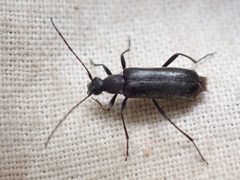
Grammoptera subargentata is a small flower longhorn beetle in the Cerambycidae, first described by William Kirby in 1837. It belongs to the Lepturinae, a group commonly known as flower longhorns for their frequent association with blossoms. The occurs in coniferous forest across North America, where have been observed on freshly cut pine logs.


Pronunciation
How to pronounce Grammoptera subargentata: /ɡræmɒptɛrə sʌbɑrdʒəntɑtə/
These audio files are automatically generated. While they are not always 100% accurate, they are a good starting point.
Identification
Grammoptera subargentata is a small lepturine cerambycid, typically distinguished from other longhorn beetles by its diminutive size and flower longhorn . It may be separated from by subtle differences in antennal proportions, elytral , and coloration, though specific diagnostic features require examination. lack the extremely elongated characteristic of many cerambycids in other .
Images
Habitat
Coniferous forests, particularly in association with pine. have been observed on freshly cut Ponderosa Pine logs at logging operations, suggesting attraction to recently disturbed or processed coniferous wood.
Distribution
North America. Documented from Canadian provinces including Alberta, British Columbia, Manitoba, and New Brunswick. The has been recorded in the western United States, including Colorado.
Host Associations
- Pinus ponderosa - observed on freshly cut logs; relationship to living trees unclear
Behavior
are known to aggregate on freshly cut pine logs. Mating has been observed in this context, suggesting logs serve as encounter sites for .
Similar Taxa
- Other Grammoptera speciesCongeneric share small size, flower longhorn , and coniferous forest ; precise identification requires examination of subtle morphological characters
- Other LepturinaeFlower longhorns as a group share small to medium size, often frequent flowers or coniferous , and have relatively short compared to other cerambycids
More Details
Taxonomic history
Described by William Kirby in 1837, making it one of the earlier-documented North American cerambycids. The specific epithet 'subargentata' refers to a somewhat silvery appearance.
Field observation context
At a Colorado logging mill, Grammoptera was noted as the most abundant longhorn beetle present on pine log stacks, outnumbering the larger and more conspicuous Monochamus scutellatus (White-spotted Sawyer).