
Saperda puncticollis
Say, 1824
Woodbine Borer
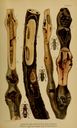
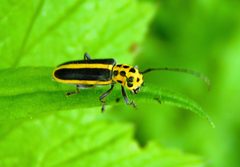
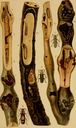
Saperda puncticollis is a longhorned beetle in the Cerambycidae, described by Thomas Say in 1824. Commonly known as the Woodbine Borer, this species occurs in Canada and the United States. Like other members of the Saperda, it is a wood-boring whose larvae develop within living or stressed woody plants.
Pronunciation
How to pronounce Saperda puncticollis: /səˈpɜːr.də pʌŋkˈtɪ.kɒl.ɪs/
These audio files are automatically generated. While they are not always 100% accurate, they are a good starting point.
Images
Distribution
Canada and the United States. Specific Canadian provinces with records include Ontario and Québec.
More Details
Taxonomic history
The was described by American entomologist Thomas Say in 1824, making it one of the earlier described North American cerambycids.
Etymology
The specific epithet 'puncticollis' refers to the punctate (dotted or pitted) surface of the pronotum (the collar-like segment behind the ), a characteristic feature of this .
Sources and further reading
- BugGuide
- Wikipedia
- GBIF taxonomy match
- iNaturalist taxon
- NCBI Taxonomy
- Catalogue of Life
- biodiversity | Blog - Part 42
- Drought, borers and dead trees - Roundheaded borers, Cerambycidae — Bug of the Week
- Recent literature – The Coleopterists Bulletin | Beetles In The Bush
- North America’s most recognizable longhorned beetle | Beetles In The Bush
- Bug Eric: From My Inbox