
Oberea
Dejean, 1835
Species Guides
17- Oberea affinis(Raspberry Cane Borer)
- Oberea caseyi
- Oberea deficiens
- Oberea delongi(Poplar Twig Borer)
- Oberea erythrocephala(Leafy Spurge Stem Boring Beetle)
- Oberea flavipes
- Oberea gracilis(Oak-sprout Oberea)
- Oberea myops
- Oberea ocellata(Sumac stem borer)
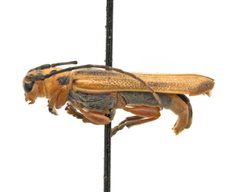
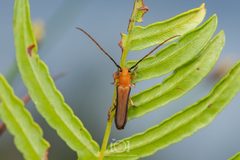
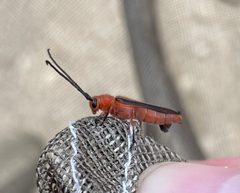
Oberea is a of longhorn beetles ( Cerambycidae) in the tribe Obereini. Most are stem borers of various plants, with documented associations including blackberries and their relatives, willows, aspen, and Euphorbia species. The genus has a broad distribution across North America, Europe, and parts of Asia and Africa. Several species have been investigated for of plants, including Oberea erythrocephala for leafy spurge management in Canada.
Pronunciation
How to pronounce Oberea: /oʊˈbɪəriə/
These audio files are automatically generated. While they are not always 100% accurate, they are a good starting point.
Identification
of Oberea can be recognized by their elongate, slender body form and relatively long . The is characterized by a dense covering of in many species, which can range from grayish to other colors. Oberea oculaticollis, for example, is distinguished by dark with dense grayish pubescence. Specific identification within the genus requires examination of detailed morphological features including antennal structure, pronotal shape, and elytral maculation patterns.
Images
Habitat
Associated with woody and herbaceous plants; found in forests, shrublands, and agricultural areas where host plants occur. Specific include trembling aspen stands, willow-lined watercourses, and areas with Rubus or Euphorbia .
Distribution
Widely distributed across the Northern Hemisphere. Documented occurrences include North America (central region from Manitoba to Texas, western regions including Nevada and California), Europe (widespread, including Scandinavia and the Mediterranean region), and parts of Asia and Africa. GBIF records indicate presence in Denmark, Norway, Sweden, and the United States (Vermont).
Diet
Larvae are cambium and phloem feeders, creating galleries in living plant stems and roots. feed on plant tissues; Oberea erythrocephala adults have been observed feeding on Euphorbia .
Host Associations
- Rubus spp. (blackberries and relatives) - stem borerdocumented for multiple in the
- Salix nigra (black willow) - occurrence, likely larval Oberea oculaticollis observed on this ; may represent first host record for this
- Populus tremuloides (trembling aspen) - larval Oberea schaumii develops in living trees, larvae feed in cambium and phloem
- Euphorbia spp. - stem and root minerOberea erythrocephala is oligophagous on certain Euphorbia , excluding E. pulcherrima and E. milii
- Solanum melongena (eggplant) - stem borerOberea trigonalis documented as pest of eggplant in Africa
Life Cycle
Varies by . Oberea schaumii has a 2-year : emerge June–August, females oviposit in bark crevices of branches 1–3 cm diameter, larvae feed and overwinter in galleries, and pupate in spring of the second year. Oberea erythrocephala is .
Behavior
of some are known to retreat from exposed positions; Oberea hirtipes have been observed crawling down to the base of plants to spend the night, requiring warming temperatures before returning to flowers. Larval galleries of Oberea schaumii girdle branches, causing branch death.
Ecological Role
Primary consumers as larvae, feeding on living plant vascular tissues. Branch girdling by larvae may affect tree growth and crown development. Some have been evaluated as agents for plants.
Human Relevance
Several are of economic concern as pests of cultivated plants, including Oberea trigonalis on eggplant. Oberea erythrocephala has been recommended for release in Canada as a agent for leafy spurge (Euphorbia esula). The is of interest to collectors and has been subject of taxonomic and biological studies.
Similar Taxa
- MecasBoth share elongate body form and dense ; Oberea can be distinguished by more slender build and different antennal proportions
- CrossidiusBoth are cerambycid associated with woody plants; Crossidius are typically more robust, often brightly colored, and associated with Ericameria and Chrysothamnus rather than the broader range of Oberea
More Details
Taxonomic complexity
The contains numerous with complex taxonomic histories. Some species show significant geographic variation, and species-level identification often requires detailed examination of genitalia and other subtle morphological features.
Biocontrol potential
Oberea erythrocephala was specifically investigated for biocontrol of leafy spurge in Canada due to its oligophagous nature and destructive impact on Euphorbia in Europe. Feeding and oviposition tests with 43 plant species confirmed its restriction to certain Euphorbia species.
Sources and further reading
- BugGuide
- Wikipedia
- GBIF taxonomy match
- iNaturalist taxon
- NCBI Taxonomy
- Catalogue of Life
- Cerambycidae | Beetles In The Bush | Page 9
- Studies of the Life History, Habits, and Taxonomic Relations of a New Species of Oberea (Oberea Ulmicola Chittenden)
- Life History of Oberea Tripunctata Swed.
- Biology of Oberea schaumii (Coleoptera: Cerambycidae) in Trembling Aspen, Populus tremuloides1
- OBSERVATIONS ON THE BIOLOGY AND BEHAVIOR OF OBEREA LINEARIS (COLEOPTERA CERAMBYCIDAE) IN SARDINIA (ITALY)
- A Stem Borer of Egg-Plant,Oberea trigonalisBreuning, 1950 (Cerambycidae: Lamiinae): Biological Notes and Host Plant Records
- The Genus Oberea Mulsant (Coleoptera: Cerambycidae) with Notes on the Taxonomy, Variation, and Host-Affinities of Many of the Species
- Investigations on Oberea erythrocephala (Schrank) (Col.: Cerambycidae), a possible biocontrol agent of leafy spurge, Euphorbia spp. (Euphorbiaceae) in Canada