
Monochamus obtusus
Casey, 1891
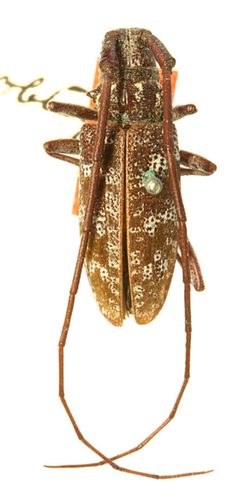
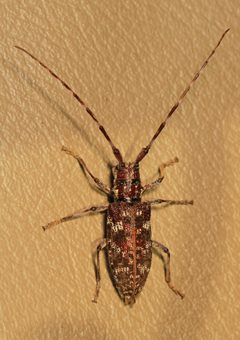
Monochamus obtusus is a longhorned beetle ( Cerambycidae) described by Thomas Lincoln Casey Jr. in 1891. It belongs to a of sawyer beetles that develop as wood-borers in coniferous trees. The is known from western North America, with records from British Columbia, Canada and the western United States. Two have been recognized: M. o. obtusus (the nominate form) and M. o. fulvomaculatus described by Linsley & Chemsak in 1983. Like other Monochamus species, it likely plays a role in forest nutrient cycling through its association with dead and dying conifer wood.
Pronunciation
How to pronounce Monochamus obtusus: /məˈnɒkəməs ɒbˈtuːsəs/
These audio files are automatically generated. While they are not always 100% accurate, they are a good starting point.
Identification
Monochamus obtusus can be distinguished from the more widespread northeastern sawyer (M. notatus) by geographic range—M. obtusus occurs in western North America while M. notatus is found east of the Rocky Mountains. Males of Monochamus typically have substantially longer than the body, while females have shorter antennae and shorter front legs. Within the , identification to species level requires examination of specific morphological characters including body proportions, antennal segment ratios, and elytral patterning; however, detailed diagnostic features for M. obtusus specifically are not well documented in readily accessible sources.
Images
Habitat
Based on -level and distribution records, M. obtusus is associated with coniferous forest in western North America. Related Monochamus breed in dead, dying, injured, fire-scorched, or recently-felled pines and other conifers. The species has been recorded from British Columbia and the western United States.
Distribution
Western North America. Documented from British Columbia, Canada and the western United States (US). GBIF records indicate presence in Canada (CA) and the United States (US).
Ecological Role
As a wood-boring in coniferous forests, M. obtusus likely contributes to decomposition of dead and dying wood, facilitating nutrient cycling. The Monochamus is also of medical and veterinary significance as a of the pinewood (Bursaphelenchus xylophilus), though specific documentation of M. obtusus in this role is not established in the provided sources.
Similar Taxa
- Monochamus notatusOverlapping characteristics but distinct geographic separation—M. notatus occurs east of the Rocky Mountains while M. obtusus is western. M. notatus is better studied and more frequently encountered in the northeastern United States and eastern Canada.
- Monochamus scutellatusAnother North American sawyer with similar and appearance; distinguished by specific morphological details and geographic distribution patterns.
More Details
Subspecies
Two are recognized: Monochamus obtusus obtusus Casey, 1891 (nominate form) and Monochamus obtusus fulvomaculatus Linsley & Chemsak, 1983.
Sources and further reading
- BugGuide
- Wikipedia
- GBIF taxonomy match
- iNaturalist taxon
- NCBI Taxonomy
- Catalogue of Life
- Bug Eric: Mate Guarding and Oviposition in the White-spotted Sawyer, Monochamus scutellatus (Coleoptera: Cerambycidae)
- Saving Nutella: New Guide Details IPM for Weevil Pests in Hazelnut
- Bug Eric: An Insect "State of the Summer" Report
- Uncategorized | Blog - Part 43
- Bug Eric: July 2009
- Bug Eric: Results of the Red Rock Canyon Open Space Bioblitz