
Lepturges regularis
(LeConte, 1852)
Lepturges regularis is a of longhorn beetle in the Lamiinae. It was described by John Lawrence LeConte in 1852. The species is considered very uncommonly encountered in the field and has been reared from dead branches of red buckeye (Aesculus pavia), representing a documented larval association.
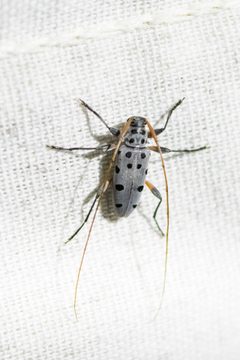
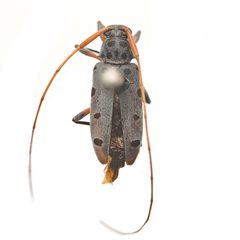
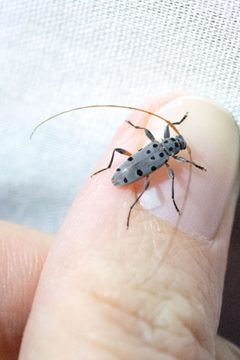
Pronunciation
How to pronounce Lepturges regularis: //lɛpˈtɜrdʒiːz ˌrɛɡjuˈlɛərɪs//
These audio files are automatically generated. While they are not always 100% accurate, they are a good starting point.
Images
Habitat
Associated with moist, east-facing slopes in rich deciduous forest understories where red buckeye occurs.
Distribution
North America; documented from the southeastern Ozark Highlands of Missouri.
Seasonality
have been reared from wood collected in spring (following one season of exposure); field observations in early April associated with spring-blooming plants.
Diet
Larval development occurs in dead wood of red buckeye (Aesculus pavia); feeding habits are unknown.
Host Associations
- Aesculus pavia - larval Reared from dead branches; represents a new larval record documented by MacRae and Rice (2007)
Life Cycle
Wood-boring larval stage; requires at least one season of wood exposure for and development.
Behavior
Wood-boring that colonizes dead branches of trees.
Ecological Role
Decomposer in forest through wood-boring larval activity in dead branches.
Human Relevance
Of interest to coleopterists due to its rarity; contributes to scientific knowledge of cerambycid associations.
Similar Taxa
- Lepturges angulatusCo-occurs in same and material; distinguished by morphological differences in the Lepturges
- Astyleiopus variegatusSympatric longhorn beetle reared from same plant; belongs to different with distinct
- Hyperplatys maculataSympatric longhorn beetle reared from same plant; belongs to different with distinct
- Leptostylus transversusSympatric longhorn beetle reared from same plant; belongs to different with distinct
More Details
Rarity
Described by MacRae (2010) as 'the very uncommonly encountered' among beetles reared from red buckeye.
Historical Collection
Original description by LeConte in 1852; basionym Liopus regularis.