
Eutrichillus
Bates, 1885
Species Guides
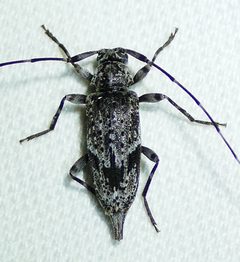
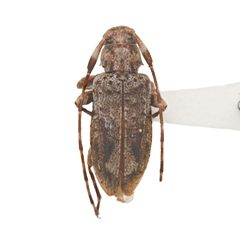
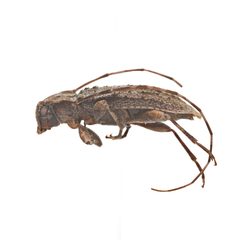
4Eutrichillus is a of longhorn beetles in the Lamiinae, established by Henry Walter Bates in 1885. The genus comprises six described distributed in North America, including Eutrichillus biguttatus, E. brevipilus, E. canescens, E. comus, E. neomexicanus, and E. pini. Members of this genus are associated with coniferous trees, particularly pines.
Pronunciation
How to pronounce Eutrichillus: /juːˈtrɪkɪləs/
These audio files are automatically generated. While they are not always 100% accurate, they are a good starting point.
Images
Habitat
Associated with coniferous forests, particularly pine-dominated woodlands. Eutrichillus biguttatus has been observed in sandstone glades with Pinus echinata (shortleaf pine) in Arkansas.
Distribution
North America. occur in the United States, with records from Arkansas, Oklahoma, New Mexico, and Vermont. Specific distributions vary by species: E. biguttatus is recorded from Arkansas and Oklahoma; E. neomexicanus from New Mexico; E. pini has a broader pine-associated range.
Seasonality
have been collected in June. Eutrichillus biguttatus was attracted to blacklights in early June in Oklahoma.
Host Associations
- Pinus echinata - larval Eutrichillus biguttatus beaten from living branches of shortleaf pine
Behavior
are and attracted to ultraviolet light sources. Eutrichillus biguttatus was collected at blacklight alongside other pine-associated cerambycids including Monochamus carolinensis, Acanthocinus obsoletus, and Amniscus sexguttatus.
Similar Taxa
- AcanthocinusBoth are pine-associated Lamiinae attracted to blacklights; Eutrichillus distinguished by -level characters requiring close examination
- AmniscusSimilar preference for conifers and blacklight attraction; Eutrichillus typically smaller with different antennal proportions
More Details
Taxonomic history
The was described by Henry Walter Bates in 1885 and has remained stable in its tribal placement within Acanthocinini. The type is Eutrichillus comus (originally described as Monohammus comus by Bates in 1881).
Collection methods
Beating living pine branches and blacklighting are effective methods for collecting Eutrichillus . The is not commonly encountered in large numbers.