
Acanthocinus obsoletus
(Olivier, 1795)
Obsolete Longhorned Beetle
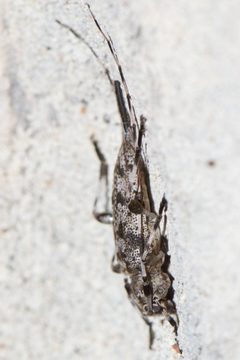
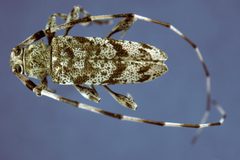
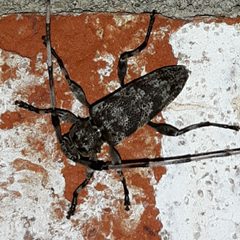
Acanthocinus obsoletus is a longhorn beetle (Cerambycidae) in the Lamiinae, described by Guillaume-Antoine Olivier in 1795. It is known from eastern North America, Cuba, and the Bahamas. The is associated with pine and has been documented at blacklight stations.
Pronunciation
How to pronounce Acanthocinus obsoletus: /əˌkænθəˈsaɪnəs ɒbˈsoʊliːtəs/
These audio files are automatically generated. While they are not always 100% accurate, they are a good starting point.
Images
Habitat
Pine-associated . Has been collected from living Pinus echinata branches and at blacklight stations in pine-dominated forests.
Distribution
Eastern North America, Cuba, and the Bahamas. Specific records include Arkansas (Ozark National Forest), Oklahoma (Ouachita National Forest), Ontario (Canada), and the Caribbean islands of Cuba and the Bahamas.
Seasonality
Active in June; documented from June 7–11 in Arkansas and Oklahoma.
Host Associations
- Pinus echinata - breedingBeaten from living branches
Behavior
Attracted to ultraviolet light sources. activity documented at blacklight stations.
Similar Taxa
- Monochamus carolinensisBoth are pine-associated cerambycids attracted to blacklights; distinguished by -level and antennal characteristics
- Amniscus sexguttatusCollected together at blacklight stations and both pine-associates; A. sexguttatus has distinct spotted elytral pattern
- Eutrichillus biguttatusSympatric pine-associated cerambycid with different elytral markings
- Leptostylus tranversusCollected together at blacklight stations; differs in body form and antennal proportions
More Details
Taxonomic note
Authorship sometimes cited as Olivier, 1800 in some sources, but original description was 1795.
Collection method
Documented collection methods include beating living pine branches and ultraviolet light trapping.