
Eutrichillus neomexicanus
(Champlain & Knull, 1925)
Eutrichillus neomexicanus is a of longhorn beetle in the Lamiinae, first described by Champlain and Knull in 1925. Field observations indicate are attracted to recently dead Pinus edulis (Colorado pinyon pine) and are active nocturnally. The species has been collected at lights and observed on dead pine branches in pinyon/juniper/oak woodland .
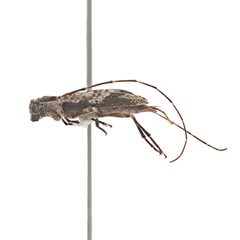
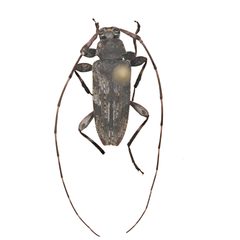
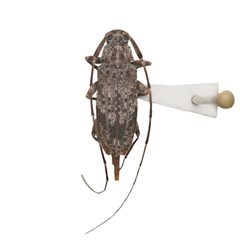
Pronunciation
How to pronounce Eutrichillus neomexicanus: //juːtrɪˈkɪləs ˌniː.oʊˌmɛksɪˈkeɪnəs//
These audio files are automatically generated. While they are not always 100% accurate, they are a good starting point.
Images
Habitat
Pinyon/juniper/oak woodland. Associated with standing, recently dead Pinus edulis (Colorado pinyon pine).
Distribution
North America: United States (New Mexico, northeastern New Mexico specifically recorded; likely broader southwestern U.S. range based on plant distribution). Mexico: presence indicated but specific localities not documented in available sources.
Seasonality
active in late June to early July. activity observed, with specimens collected at night on dead pine branches and attracted to lights.
Host Associations
- Pinus edulis - breedingStanding, recently dead trees; observed on trunk and branches, larvae likely develop in dead wood
Behavior
Nocturnally active on dead pine branches. have been observed on trunk and branches of standing, recently dead Pinus edulis at night. Attracted to ultraviolet and mercury vapor lights.
Similar Taxa
- Other Eutrichillus species-level similarity in body form and antennal structure; specific identification requires examination of genitalia and other fine morphological details
- Other Acanthocinini in dead pine habitatsShared use of recently dead Pinus edulis; E. neomexicanus distinguished by combination of size, coloration, and antennal segment proportions
More Details
Field collection notes
Multiple individuals collected from a single standing, recently dead Pinus edulis in pinyon/juniper/oak woodland at Mill Rim Campground, Harding County, New Mexico, in late June. Specimens collected both by beating dead branches and by searching on trunk and branches. Co-occurring with Zopherus concolor and other nocturnal beetles on same tree.