
Euderces picipes
(Fabricius, 1787)
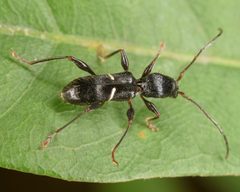
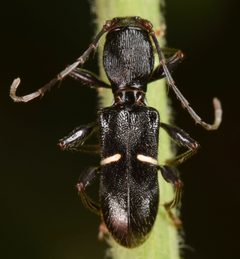
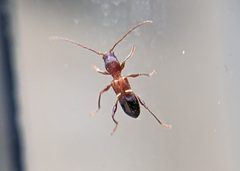
Euderces picipes is a small -mimicking longhorned beetle in the Cerambycidae. The exhibits pronounced geographic color variation: northern are uniformly black, while southern and southwestern populations display red or orange coloration on the or elytral edges. This color was formerly considered to represent separate species, with red forms described as E. abdominalis, but is now recognized as intraspecific variation correlated with geographic distribution. Like other members of the , are effective Batesian mimics of ants.
Pronunciation
How to pronounce Euderces picipes: /juːˈdɜːrsiːz ˈpaɪsɪpiːz/
These audio files are automatically generated. While they are not always 100% accurate, they are a good starting point.
Identification
Small cerambycid beetle with -like appearance. Body slender, typically 7–10 mm in length. Coloration geographically variable: northern specimens uniformly black; southern specimens with red or orange abdominal margins or entirely red . White or pale pubescent markings on create illusion of constricted ant-like waist. relatively short for . Distinguished from similar ant-mimic cerambycids (Molorchus, Cyrtophorus, Tilloclytus) by combination of size, color pattern, and antennal proportions.
Images
Distribution
Eastern and central United States; recorded from Canada (Ontario, Québec). Northern (New England through Great Lakes region) characterized by black coloration; southern and southwestern populations exhibit red or orange color morphs.
Similar Taxa
- Euderces piniConvergent -mimicry and overlapping geographic range; distinguished by smaller size (7–8 mm), more slender build, and association with different trees including flowering dogwood and pecan
- Cyrtophorus verrucosusSimilar -mimicking cerambycid with comparable size and coloration; distinguished by different elytral markings and pronotal structure
- Molorchus bimaculatusAnother small -mimic cerambycid active in early spring; distinguished by smaller size (<10 mm), more convex body profile, and different elytral pattern
Sources and further reading
- BugGuide
- Wikipedia
- GBIF taxonomy match
- iNaturalist taxon
- NCBI Taxonomy
- Catalogue of Life
- North America’s itsiest bitsiest longhorned beetle | Beetles In The Bush
- Bug Eric: The Black Corsair
- Flower ants? Check again! | Beetles In The Bush
- Bug Eric: That's Not an Ant?!
- The “silky-bellied humpbacked” ant | Beetles In The Bush
- Bee Assassin on Coneflower | Beetles In The Bush