
Tillomorphini
Genus Guides
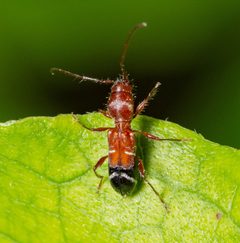
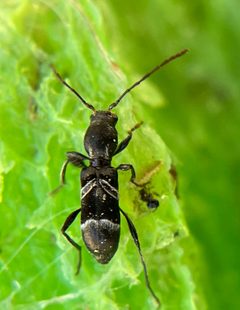
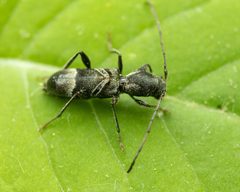
3Tillomorphini is a tribe of longhorn beetles (Cerambycidae) within the Cerambycinae. The tribe contains approximately 14 distributed across the Neotropical and Nearctic regions, including Arawakia, Bonfilsia, Calliclytus, Euderces, Gourbeyrella, Lamproclytus, Licracantha, Mygalobas, Pentanodes, Tetranodus, Tilloglomus, and Tillomorpha. Members of this tribe are generally small beetles, with some exhibiting remarkable -mimicry. The genus Euderces in particular contains some of the smallest cerambycid beetles and is noted for effective myrmecomorphic adaptations.
Pronunciation
How to pronounce Tillomorphini: /ˌtɪloʊˈmɔːrfɪnaɪ/
These audio files are automatically generated. While they are not always 100% accurate, they are a good starting point.
Images
Distribution
Neotropical and Nearctic regions. Specific distribution varies by ; for example, Euderces occurs in North America including the eastern United States, while other genera such as Tillomorpha and related are primarily Neotropical.
Behavior
Some members, particularly in the Euderces, exhibit -mimicry (myrmecomorphy). These beetles are small, slow-moving, and possess morphological adaptations including humped that create the illusion of a narrow-waisted ant. Unlike other ant-mimicking cerambycids that move swiftly, Euderces move slowly and clumsily, resembling ant movement patterns.
Similar Taxa
- AnaglyptiniAnother tribe within Cerambycinae containing small -mimicking longhorn beetles; both tribes share myrmecomorphic tendencies and small body size
- ClytiniTribe in Cerambycinae that also includes -mimicking ; distinguished from Tillomorphini by different morphological features and generally more active movement patterns
More Details
Included genera
The tribe comprises 14 : Arawakia, Bonfilsia, Calliclytus, Epipodocarpus, Epropetes, Euderces, Gourbeyrella, Lamproclytus, Licracantha, Mygalobas, Pentanodes, Tetranodus, Tilloglomus, and Tillomorpha
Taxonomic status
Accepted as a valid tribe within Cerambycinae; classification follows Catalogue of Life and NCBI databases