
Trichoferus
Wollaston, 1854
Species Guides
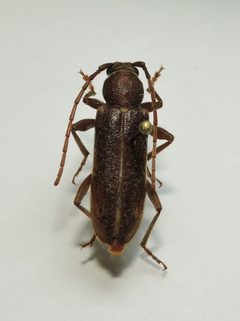
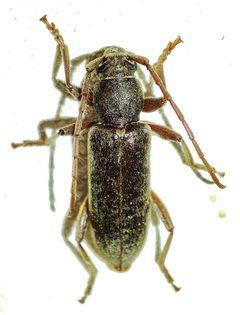
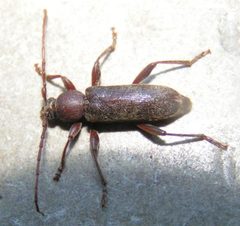
1- Trichoferus campestris(velvet longhorned beetle)
Trichoferus is a of long-horned beetles (Cerambycidae) established by Wollaston in 1854, containing at least 20 described . Several species have become economically significant as wood-boring pests, with Trichoferus campestris (velvet longhorned ) being particularly well-documented for its worldwide expansion through international trade. The genus includes both native and introduced species with documented associations with living trees, cut wood, and wood packaging material.
Pronunciation
How to pronounce Trichoferus: /ˌtɹɪkəˈfɛrəs/
These audio files are automatically generated. While they are not always 100% accurate, they are a good starting point.
Images
Habitat
in this are associated with wood substrates. Trichoferus campestris has been documented in live trees, cut branches, and wood packaging material. Trichoferus fissitarsis is associated with fig tree trunks and dried wood. Some species have been intercepted in freight shipping contexts, indicating to transported wood materials.
Distribution
Native to the Palearctic region, with multiple now established worldwide. Trichoferus campestris is documented in 29 countries across the Holarctic, with in North America (first detected in the 1990s, now present in Minnesota and Ontario), Europe (spreading westward, confirmed in Romania and other countries), and Asia. Trichoferus fissitarsis is documented in the Kurdistan Region of Iraq. Phytosanitary interceptions have occurred in France and Sweden.
Seasonality
Trichoferus campestris exhibits unimodal abundance in Minnesota with peak activity around 650 degree days (base 10°C) in early July, based on two years of -trap data.
Diet
Larvae are wood-borers. Trichoferus campestris is ; in North America, larvae have been reared from Acer platanoides (Norway maple). In trials, oviposition and development occurred more readily on Juglans nigra and Malus domestica than on Acer saccharum or Pinus strobus. do not feed on wood.
Host Associations
- Acer platanoides - larval First North American record; larvae extracted from dying tree in Ontario
- Juglans nigra - larval Preferred in laboratory trials; higher oviposition and development success
- Malus domestica - larval Preferred in laboratory trials; oviposition higher on cankered than uncankered wood
- Ficus carica - larval of Trichoferus fissitarsis in Kurdistan Region, Iraq
- Acer saccharum - larval Lower oviposition and development success in laboratory trials
- Pinus strobus - larval Lower oviposition and development success in laboratory trials
- Tilia - trap associationSignificantly more T. campestris captured in traps hung in Tilia than in Quercus in Minnesota study
Life Cycle
Complete with , larva, pupa, and stages. Larvae are the primary damaging stage, creating tunnels in wood. Trichoferus campestris larvae undergo ; cold exposure during this period benefits adult development. The last larval instar and pupa of Trichoferus fissitarsis have been morphologically described.
Behavior
are capable of and contribute to active range expansion. Trichoferus campestris oviposits more readily on cankered than uncankered apple wood. Larvae create large-diameter exit holes and extensive tunnel systems in wood. The has adapted to freight transport conditions, facilitating anthropogenic spread.
Ecological Role
Several function as economic pests of forestry and orchard systems. Trichoferus campestris reduces tree vitality through stem-boring damage and is considered a major threat to phytosanitary conditions in forests and orchards. Trichoferus fissitarsis is described as dangerous to fig in Iraq. The serves as for including the giant pteromalid Solenura ania, an ectoparasitoid of T. campestris.
Human Relevance
Multiple are significant pests. Trichoferus campestris is a pest in many countries and has been subject to phytosanitary interceptions in Europe. The species threatens timber, furniture, and live tree industries. Monitoring systems using -baited traps have been developed for detection. International spread has been facilitated by wood packaging material in global trade.
Sources and further reading
- BugGuide
- Wikipedia
- GBIF taxonomy match
- iNaturalist taxon
- NCBI Taxonomy
- Catalogue of Life
- NOTES ON TRICHOFERUS ARENBERGERI WITH DESCRIPTION OF MALE (COLEOPTERA, CERAMBYCIDAE)
- Range expansion of <i>Trichoferus campestris</i> (Faldermann) (Coleoptera: Cerambycidae) in Europe with the confirmation of its presence in Romania
- Molecular Identification and Morphology of the Larva of Fig Stem Borer, Trichoferus fissitarsis Sama, Fallahzadeh and Rapuzzi, 2005 (Coleoptera, Cerambycidae) from Kurdistan Region, Iraq
- First description of the male of Solenura ania (Walker) (Hymenoptera: Pteromalidae), a giant pteromalid parasitoid of Trichoferus campestris (Faldermann), with special reference to its sexual dimorphism
- Discovery ofTrichoferus campestris(Coleoptera: Cerambycidae) in Ontario, Canada and first host record in North America
- Seasonal Phenology of Velvet Longhorned Beetle, Trichoferus campestris (Coleoptera: Cerambycidae) in Minnesota
- Worldwide distribution and theoretical spreading of Trichoferus campestris (Coleoptera: Cerambycidae) depending on the main climatic elements
- Ovipositional behaviour and larval performance of Trichoferus campestris (Faldermann) (Coleoptera: Cerambycidae) on cut branches of four North American tree species
- Figure 4 from: Cao L, Cui J, Wang X, Wang G, Yang Z (2020) First description of the male of Solenura ania (Walker) (Hymenoptera: Pteromalidae), a giant pteromalid parasitoid of Trichoferus campestris (Faldermann), with special reference to its sexual dimorphism. Biodiversity Data Journal 8: e54961. https://doi.org/10.3897/BDJ.8.e54961
- Figure 3 from: Cao L, Cui J, Wang X, Wang G, Yang Z (2020) First description of the male of Solenura ania (Walker) (Hymenoptera: Pteromalidae), a giant pteromalid parasitoid of Trichoferus campestris (Faldermann), with special reference to its sexual dimorphism. Biodiversity Data Journal 8: e54961. https://doi.org/10.3897/BDJ.8.e54961
- Figure 2 from: Cao L, Cui J, Wang X, Wang G, Yang Z (2020) First description of the male of Solenura ania (Walker) (Hymenoptera: Pteromalidae), a giant pteromalid parasitoid of Trichoferus campestris (Faldermann), with special reference to its sexual dimorphism. Biodiversity Data Journal 8: e54961. https://doi.org/10.3897/BDJ.8.e54961
- Figure 1 from: Cao L, Cui J, Wang X, Wang G, Yang Z (2020) First description of the male of Solenura ania (Walker) (Hymenoptera: Pteromalidae), a giant pteromalid parasitoid of Trichoferus campestris (Faldermann), with special reference to its sexual dimorphism. Biodiversity Data Journal 8: e54961. https://doi.org/10.3897/BDJ.8.e54961