
Aneflomorpha
Casey, 1912
Species Guides
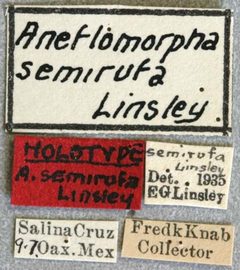
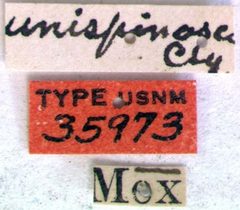
15Aneflomorpha is a of longhorn beetles in the Cerambycidae, Cerambycinae, and tribe Elaphidiini. The genus was established by Casey in 1912. in this genus are primarily and have been documented in the southwestern United States and Mexico. They are associated with woody vegetation, particularly oaks and mesquites, and are frequently attracted to ultraviolet and mercury-vapor light stations.
Pronunciation
How to pronounce Aneflomorpha: /ˌæn.ɛf.loʊˈmɔr.fə/
These audio files are automatically generated. While they are not always 100% accurate, they are a good starting point.
Identification
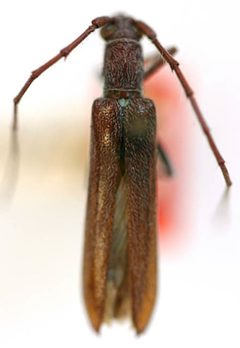
Aneflomorpha are small to medium-sized elaphidiine longhorn beetles. They can be distinguished from similar elaphidiine by a combination of antennal structure, pronotal shape, and elytral . Species in this genus typically have relatively short compared to body length and lack the extreme elongation seen in some related genera. Accurate identification to species level requires examination of genitalia and reference to specialized taxonomic literature on the tribe Elaphidiini.
Images
Habitat
Aneflomorpha inhabit arid and semi-arid regions of the southwestern United States and Mexico. They are found in oak-juniper woodlands, mesquite scrub, and riparian corridors with woody vegetation. Specific records indicate association with Quercus oblongifolia (Mexican blue oak), Quercus emoryi (Emory oak), Prosopis glandulosa (mesquite), and Senegalia greggii (cat-claw acacia). They occur from low desert elevations up to mid-elevation mountain slopes.
Distribution
Southwestern United States (Arizona, New Mexico, Texas) and Mexico. Documented from the Sky Islands region of southeastern Arizona including the Huachuca Mountains, Santa Rita Mountains, and Atascosa Mountains. Also recorded from western Texas and southern New Mexico.
Seasonality
activity has been documented from July through early August in Arizona and New Mexico. Peak activity appears to coincide with the summer monsoon season. The is , with adults appearing at light stations after dusk.
Behavior
are and strongly attracted to ultraviolet (UV) and mercury-vapor (MV) light stations. They have been observed flying to light sheets in oak-juniper woodlands and mesquite-acacia scrub. During daylight hours, adults may be found on woody vegetation, particularly oaks and mesquites, where they can be collected by beating dead or living branches.
Ecological Role
Aneflomorpha are wood-boring beetles whose larvae develop in dead or dying woody plants. They contribute to nutrient cycling in arid woodland by breaking down dead wood. As insects attracted to light, they serve as prey for nocturnal including bats, night-flying birds, and other arthropods.
Human Relevance
Aneflomorpha is of interest to coleopterists and entomological collectors due to its occurrence in the well-studied Sky Islands region of southeastern Arizona. The is not considered economically significant and does not damage living trees of commercial value. Specimens are documented in biodiversity surveys and contribute to understanding of cerambycid diversity in the southwestern United States.
Similar Taxa
- ElaphidionBoth are in the tribe Elaphidiini and share general body form, but Elaphidion typically have longer and different elytral punctation patterns.
- AnelaphusAnother elaphidiine with similar size and preferences, but Anelaphus often show distinct color patterns and differ in pronotal structure.
- StenosphenusOverlaps in distribution and light-attracted , but Stenosphenus are generally more elongate with different antennal proportions.