
Stenosphenus
Haldeman, 1847
Species Guides
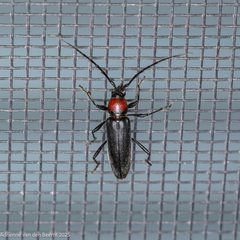
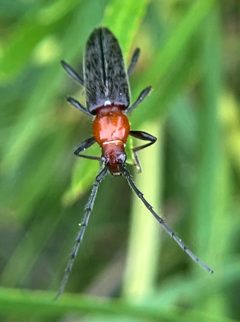
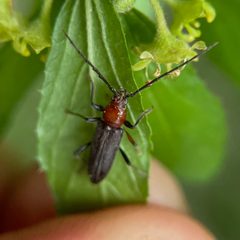
6Stenosphenus is a of longhorn beetles ( Cerambycidae) first described by Haldeman in 1847. The genus contains approximately 22 described distributed across North America from the eastern United States through Mexico and into Central America. Some species exhibit specialized associations with particular tree genera, particularly hickories (Carya). At least one species, Stenosphenus notatus, is notable for as an —an uncommon strategy among eastern North American cerambycids.
Pronunciation
How to pronounce Stenosphenus: //ˌstɛn.oʊˈsfɛn.əs//
These audio files are automatically generated. While they are not always 100% accurate, they are a good starting point.
Identification
within Stenosphenus are distinguished from related cerambycid by combinations of antennal, leg, and body proportions, though specific diagnostic characters vary by species. Stenosphenus notatus, the most commonly encountered species in the eastern United States, is a relatively small longhorn beetle that can be recognized by its early spring period, which precedes that of most sympatric cerambycid species by several weeks.
Images
Habitat
in this are associated with dead or dying woody vegetation. Stenosphenus notatus occurs almost exclusively on hickories (genus Carya), including mockernut hickory (Carya alba), water hickory (C. aquatica), shellbark hickory (C. laciniosa), and shagbark hickory (C. ovata). Stenosphenus sobrius has been observed on wind-thrown branches of palo verde (Cercidium floridum) in San Lucan xeric scrub of Baja California Sur, Mexico.
Distribution
The ranges across North America from the eastern United States (Missouri and surrounding states) westward through Mexico to the southern tip of the Baja California peninsula. Individual distributions vary: Stenosphenus notatus is widespread in the eastern U.S., while Stenosphenus sobrius occurs in the southwestern United States and Mexico.
Seasonality
activity timing varies by . Stenosphenus notatus emerges during early spring (late March to mid-April in Missouri), completing its adult phase before most other longhorn beetle species become active. This early seasonality is linked to its adult strategy. Other species likely exhibit different phenologies, though specific data are limited.
Host Associations
- Carya alba - larval mockernut hickory; reared from dead branches and trunk sections
- Carya aquatica - larval water hickory
- Carya laciniosa - larval shellbark hickory
- Carya ovata - larval shagbark hickory
- Cercidium floridum - occurrencepalo verde; found resting on undersides of fresh wind-thrown branches in Baja California Sur
Life Cycle
Stenosphenus notatus requires two seasons to complete development. occurs in the latter part of the second season, with emerging before winter onset. This overwinters as an adult rather than as a larva—an uncommon strategy among eastern North American cerambycids, where most species overwinter within wood as partially or fully grown larvae. Upon spring , adults seek freshly dead host wood for oviposition.
Behavior
of Stenosphenus notatus have been observed serving as phoretic for pseudoscorpions, which attach to the beetles' legs and are presumably dispersed to new patches (dead trees) via this association. This represents one of the few documented cases of involving cerambycid beetles and pseudoscorpions. Adults of Stenosphenus sobrius rest on undersides of fresh wind-thrown branches.
Ecological Role
As wood-boring beetles, larvae contribute to the decomposition of dead and dying hardwood trees. Their specialized associations with particular (notably Carya) suggest they play a role in nutrient cycling within specific forest . The phoretic relationship with pseudoscorpions may facilitate of these predatory arachnids between ephemeral patches.
Similar Taxa
- Other CerambycinaeMany longhorn beetles share general body plan; Stenosphenus distinguished by specific antennal proportions and, in the case of S. notatus, notably early spring activity period
- Megacyllene caryaeAlso associated with Carya; distinguished by different and morphological characters
More Details
Phoretic pseudoscorpion associations
The observation of pseudoscorpions attached to Stenosphenus notatus represents a documented case of potential in this . Alternative hypotheses for this attachment include accidental boarding, obligate , and phagophily ( on other associates), though the explanation is considered most probable given the of pseudoscorpions in dead wood .
Host plant records
A literature record of Celtis (hackberry) as a for Stenosphenus notatus (Linsley 1963) has been questioned; the observer suggests this may represent incidental association rather than true larval host relationship, a common interpretive problem in wood-boring host plant literature.