
Anelaphus
Linsley, 1936
twig pruners
Species Guides
19Anelaphus is a of longhorned beetles in the Cerambycidae, first described by Linsley in 1936. in this genus are commonly known as twig pruners due to their distinctive larval of cutting the portion of branches before . The genus is associated primarily with deciduous trees, especially oaks. Larvae develop within living branches and create characteristic pruning cuts that cause branch dieback.
Pronunciation
How to pronounce Anelaphus: /ˈænɛˌlæfəs/
These audio files are automatically generated. While they are not always 100% accurate, they are a good starting point.
Identification
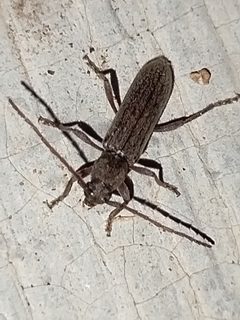
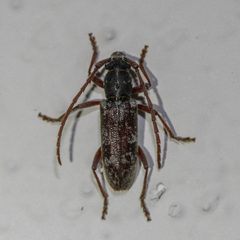
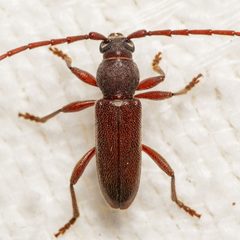
Anelaphus can be recognized as small to medium-sized cerambycids. The most reliable diagnostic feature is the distinctive cut made by mature larvae at the base of pruned branches: a clean, angled cut that appears almost mechanical. This cut differs from wind breakage or other damage by its precise, beveled appearance. Branches found on the ground with this cut pattern indicate active larval presence. Adults may require examination of antennal and elytral characteristics for -level identification.
Images
Habitat
Found in deciduous forests and woodlands, particularly where oaks (Quercus spp.) are present. Occurs in both upland and riparian woodland settings. Larval is living branches of trees, typically in the . Pruned branches accumulate on the forest floor beneath host trees.
Distribution
North America. Distribution records include Colorado, Vermont, and other United States locations. The occurs broadly across eastern and central North America where suitable trees are present.
Seasonality
emerge in spring. Larval activity occurs within branches throughout the growing season. Mature larvae cut branches in late summer to fall, with pruned branches most commonly found during autumn and winter. Adults have been observed on flowers in early spring.
Diet
Larvae feed on living wood of deciduous tree branches, primarily oaks (Quercus spp.). Specific associations include Quercus shumardii (Shumard's oak), Quercus velutina (black oak), and other oak . have been observed feeding on pollen and nectar of early spring flowers.
Host Associations
- Quercus - larval primary
- Quercus shumardii - larval Shumard's oak
- Quercus velutina - larval black oak
Life Cycle
are laid on living branches of trees. Larvae bore into and feed within the living wood, creating galleries. As larvae mature, they cut through the branch internally near the base, causing the portion to die and eventually fall. Larvae pupate within the fallen branch. emerge from the pruned branches in spring.
Behavior
Larvae are branch pruners: they sever the vascular connection of branches by cutting through wood from the inside, causing branch dieback. This is distinctive and diagnostic for the . Pruned branches on the ground indicate successful larval development. are active in spring and visit flowers.
Ecological Role
As a twig pruner, the contributes to thinning and nutrient cycling in deciduous forests. Fallen branches decompose and return nutrients to the forest floor. The pruning creates entry points for other wood-inhabiting organisms.
Human Relevance
Can be a minor pest in urban and ornamental settings where branch dieback is undesirable. Pruned branches may create litter concerns. Collected by entomologists using boxes to rear from infested branches. The distinctive pruning cut is used as a field indicator for presence.
Similar Taxa
- AgrilusAgrilus are also wood-boring beetles in oaks, but they are jewel beetles (Buprestidae) with flattened bodies and create different gallery patterns; are active in summer and do not prune branches
- Plinthocoelium suaveolensAnother cerambycid associated with trees, but this bumelia borer creates piles at tree bases rather than pruned branches, and is associated with Sideroxylon rather than Quercus
More Details
Collection method
Infested branches with characteristic pruning cuts can be collected and placed in boxes to rear . This is a standard technique for obtaining specimens for identification and study.