
Thrincopyge
LeConte, 1858
jewel beetles
Species Guides
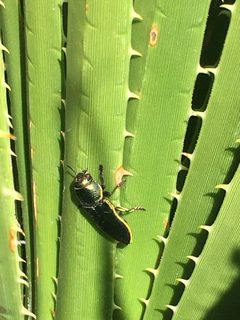
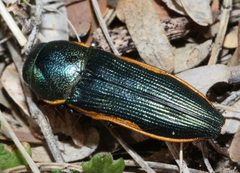
2Thrincopyge is a of jewel beetles ( Buprestidae) in the Polycestinae. The genus contains three described : T. alacris, T. ambiens, and T. marginata. are known for their striking metallic coloration, typically combining blue or green with vivid yellow. Larvae develop within the dried flowering stalks of sotol plants (Dasylirion spp.), while adults conceal themselves at the base of the plants among the long, strap-like leaves. The genus occurs in the southwestern United States and northern Mexico.

Pronunciation
How to pronounce Thrincopyge: /θrɪŋkoʊˌpaɪdʒi/
These audio files are automatically generated. While they are not always 100% accurate, they are a good starting point.
Identification
Thrincopyge are distinguished from other North American Buprestidae by their specific association with sotol plants (Dasylirion spp.) and their distinctive metallic blue-green and yellow coloration. Within the , the three species (T. alacris, T. ambiens, T. marginata) are distinguished by subtle differences in elytral markings and body proportions, though specific diagnostic characters require examination. They may be confused with other metallic buprestids in the region, but the combination of color pattern and plant association is diagnostic for the genus.
Images
Habitat
Sotol grasslands and transitional zones between desert scrub and oak-juniper woodlands, typically in foothill regions. The is defined by the presence of plants in the Dasylirion (sotol), which are agave-like plants with long, strap-like, saw-toothed leaves.
Distribution
Southwestern United States (Arizona, New Mexico, western Texas) and northern Mexico. Specifically documented from the Chisos Mountains foothills in Big Bend National Park, Texas, and areas of New Mexico where Dasylirion leiophyllum occurs.
Seasonality
activity period appears to be primarily spring and early summer, based on collection records. One source indicates that checking sotol plants in June yielded adults, while a September survey found only larval galleries and holes, suggesting the adult season had concluded.
Host Associations
- Dasylirion wheeleri - plantCommon sotol; hide at base of leaves, larvae bore in dried flowering stalks
- Dasylirion leiophyllum - plantSmooth sotol; larval galleries found in senesced flowering stalks in September
Life Cycle
Larvae bore through the dried, senesced flowering stalks of sotol plants, creating -packed galleries. occurs within the stalks, with holes visible on the lower portions of old stalks. Adults conceal themselves at the base of living plants, wedged among the long, recurved, saw-toothed leaves. The appears to be or semivoltine, with larvae developing over an extended period within the persistent dried stalks.
Behavior
are cryptic, remaining hidden at the base of sotol plants during the day. They are difficult to detect without physically spreading the stiff, spiny leaves of the plant. When disturbed, they may attempt to escape deeper into the leaf bases. Adults are not known to be active on flowers or foliage. The exhibits a close obligate association with its host plants, with both life stages dependent on Dasylirion species for survival.
Ecological Role
As larvae, Thrincopyge act as decomposers or stem-borers in the dried flowering stalks of sotol plants, contributing to nutrient cycling in sotol grassland . Their specific association suggests they may play a role in regulating sotil flowering stalk persistence, though their overall ecological impact is likely minor given their specialized and presumably low- .
Human Relevance
Thrincopyge are of interest to entomologists and collectors due to their striking metallic coloration and specialized natural history. They are not known to be economically important as pests or beneficial insects. Collection requires effort and often results in physical contact with the sharp, recurved spines of sotol plants. They have been featured in entomological narratives describing the challenges and rewards of searching for jewel beetles in the southwestern United States.
Similar Taxa
- AcmaeoderaOther metallic buprestid occurring in the same region; distinguished by different associations (typically woody plants rather than monocots) and different (often found on flowers)
- GyascutusLarge, metallic buprestids in the same region; distinguished by association with Atriplex (saltbush) and other Chenopodiaceae rather than sotol
- LampetisMetallic buprestids with similar size and coloration; distinguished by different plant associations and lack of specific sotol dependency
More Details
Taxonomic history
The was established by LeConte in 1858 with the description of Thrincopyge alacris. Two additional were described later: T. ambiens (originally described in a different genus by LeConte in 1854 and later transferred) and T. marginata (Waterhouse, 1890).
Collection challenges
The recurved, saw-toothed spines of sotol plants make searching for physically demanding and potentially painful. Collectors typically use long forceps to extract beetles from the tight spaces at leaf bases while attempting to minimize contact with the sharp leaf margins.