
Thrincopyge ambiens
(LeConte, 1854)
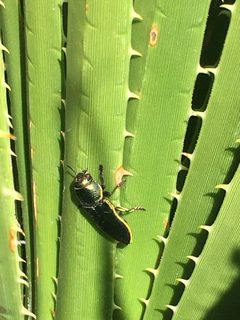
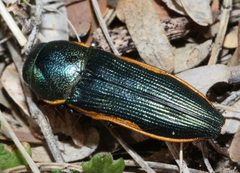
Thrincopyge ambiens is a metallic wood-boring beetle in the Buprestidae, first described by LeConte in 1854. The is found in Central America and North America. Like other members of the Thrincopyge, are associated with sotol plants (Dasylirion species), where they wedge themselves at the base of the rosette and larvae develop within dried flowering stalks.
Pronunciation
How to pronounce Thrincopyge ambiens: //θrɪŋˈkɒpɪdʒ ˈæmbiɛnz//
These audio files are automatically generated. While they are not always 100% accurate, they are a good starting point.
Identification
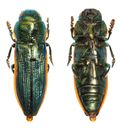
Members of the Thrincopyge are distinguished from other Buprestidae by their association with sotol plants and their of wedging into the leaf bases. Specific identification of T. ambiens requires examination of morphological characters; the exhibits metallic coloration typical of the . Close examination of elytral and body proportions is necessary to distinguish from such as T. alacris and T. equicollis.
Images
Habitat
Associated with sotol grasslands and transitional between desert scrub and oak-juniper woodlands. occur at the base of living sotol plants (Dasylirion wheeleri and related ), while larvae inhabit the dried, flowering stalks of these plants.
Distribution
Central America and North America. GBIF records indicate presence in the Nearctic and Neotropical regions, with confirmed occurrences in Middle America and North America.
Seasonality
have been observed in association with senescing sotol flowering stalks. Based on related in the , adult activity likely coincides with the flowering and post-flowering period of plants, which varies geographically but generally occurs in late spring through summer in the southwestern United States.
Host Associations
- Dasylirion wheeleri - larval development in dried flowering stalks; at leaf basesPrimary ; sotol grassland
Life Cycle
Larvae bore through dried flowering stalks of sotol plants, creating -packed galleries. occurs within the stalk, and emerge through characteristic exit holes. Adults wedge themselves between the long, strap-like leaves at the base of living plants, where they are protected from view and environmental extremes.
Behavior
are cryptic, remaining hidden at the base of plant rosettes. When disturbed, they may rapidly retreat deeper into the leaf bases. Collection requires careful prying apart of the stiff, recurved spiny leaves to access adults, a process complicated by the plant's defensive armature.
Ecological Role
As a herbivore of sotol, contributes to nutrient cycling through the breakdown of flowering stalks. The is part of the distinctive fauna associated with sotol grasslands, a transitional between desert and woodland .
Human Relevance
Of interest to coleopterists and natural historians for its specialized association and striking metallic coloration. The difficulty of collecting specimens from the spiny host plants adds to its desirability among enthusiasts. Not known to be of economic importance.
Similar Taxa
- Thrincopyge alacrisAlso associated with sotol; distinguished by subtle differences in elytral and body proportions
- Thrincopyge equicollisShares sotol association; requires close morphological examination for separation
- Acmaeodera speciesSimilar metallic appearance and flower-visiting in some , but not associated with sotol bases; typically more flattened and with distinct punctation patterns
More Details
Taxonomic history
Originally described as Buprestis ambiens by LeConte in 1854, later transferred to the Thrincopyge. The genus is small and morphologically distinctive within Buprestidae.
Collection challenges
The recurved, stout spines of Dasylirion leaves make collection difficult and often painful. Long forceps are typically required to extract specimens from their hiding places without excessive damage to collector or plant.