
Mastogenius
Solier, 1849
Species Guides
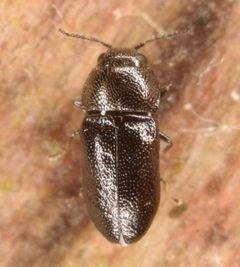
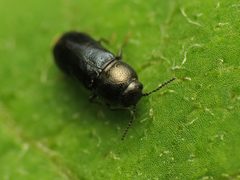
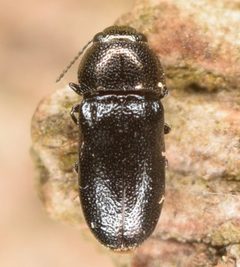
4Mastogenius is a of minute jewel beetles ( Buprestidae) characterized by extremely small body size— measure approximately 2 mm in length. The genus contains approximately 40 described distributed across the Americas, from the southwestern United States through Central America and into South America. Adults are typically collected by beating oak foliage, and at least one species has been recorded from Florida sand oak (Quercus geminata). The genus is among the smallest buprestids in North America, making field identification challenging without close examination.
Pronunciation
How to pronounce Mastogenius: /ˌmæstoʊˈdʒiːniəs/
These audio files are automatically generated. While they are not always 100% accurate, they are a good starting point.
Identification
Mastogenius can be distinguished from other minute North American buprestids by its combination of extremely small size (~2 mm), compact body form, and association with oak foliage. It differs from Trachyini (Taphrocerus, Pachyschelus, Brachys)—which are also small and flattened—by lacking the highly derived, wedge-shaped body form and leaf-mining larval characteristic of that tribe. Specific identification requires examination of microscopic characters not detailed in general sources.
Images
Habitat
Associated with oak woodland and forest . have been collected by beating foliage of oak including sand oak (Quercus geminata) in Florida sandhill woodland and Mexican blue oak in Arizona mountain canyons. The precise microhabitat requirements for larvae remain undocumented.
Distribution
New World distribution ranging from the southwestern United States (Arizona, Florida) south through Mexico, Central America, and into South America. -level distributions are more restricted; for example, M. puncticollis occurs in Arizona, while other species are recorded from Ecuador, Peru, and the Galápagos Islands.
Seasonality
activity period varies by and region. In Florida, adults have been collected during spring (early April). In Arizona, adults have been found during summer collecting trips (July–August). Specific periods are poorly documented for most species.
Host Associations
- Quercus geminata - associationsand oak; collected by beating foliage in Florida
- Quercus - associationMexican blue oak and other oak in Arizona
Behavior
are active on oak foliage and are collected by beating branches onto a sheet. They are presumably given the beating collection method, though specific activity patterns are undocumented.
Human Relevance
No documented economic or medical significance. Of interest primarily to coleopterists studying buprestid diversity and to ecologists investigating oak-associated insect .
Similar Taxa
- BrachysAlso small (~3–5 mm), flattened buprestids associated with hardwood foliage; distinguished by larger size, different body proportions, and leaf-mining larval habits in oaks
- TaphrocerusSimilar minute size and compact form; distinguished by association with sedges (Cyperaceae) rather than oaks, and leaf-mining larval habits
- PachyschelusSimilar small size and flattened form; distinguished by association with herbaceous Fabaceae and leaf-mining larval habits
More Details
Taxonomic diversity
The contains approximately 40 described , with notable diversity in Ecuador and Peru. Several species have been described relatively recently (e.g., M. aliciae Westcott 2005, M. cyanelytron Westcott 2008), indicating ongoing taxonomic work.
Collection challenges
Due to their minute size, Mastogenius specimens are easily overlooked in general collecting and require targeted beating of oak foliage and careful examination of material to detect.