
Taphrocerus
Solier, 1833
Species Guides
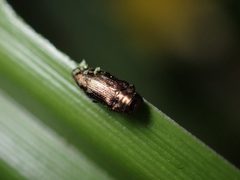
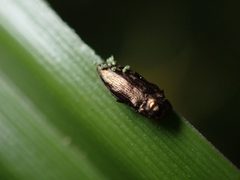
11Taphrocerus is a of metallic wood-boring beetles ( Buprestidae) comprising over 190 described , predominantly distributed across North, Central, and South America. One anomalous species has been described from South Africa. Members are commonly referred to as "sedgie wedgies" among coleopterists due to their frequent association with sedges and related wetland plants. The genus exhibits leaf-mining larval , with larvae developing within the leaf tissue of plants.
Pronunciation
How to pronounce Taphrocerus: /tæˈfroʊsərəs/
These audio files are automatically generated. While they are not always 100% accurate, they are a good starting point.
Identification
Taphrocerus are small, elongate buprestid beetles typically found in association with sedges and wetland vegetation. Species-level identification requires examination of subtle morphological characters including antennal structure, prosternal process shape, and elytral sculpturing. The can be distinguished from similar small buprestids by its combination of small size, association with monocotyledonous , and characteristic body proportions. are often collected by sweeping herbaceous vegetation in wetland and prairie .
Images
Habitat
Primarily associated with wetland and moist prairie . Specific documented associations include Carex hyalinolepis (sedges) in Missouri wetlands and Cyperus esculentus (yellow nutsedge) for T. schaefferi. range from wet bottomland forests and slough margins to xeric prairies where sedges occur.
Distribution
Native to the New World, with the vast majority of distributed across North, Central, and South America. One species has been described from South Africa, representing an anomalous disjunct distribution. Within North America, documented from Missouri, Oklahoma, Kansas, and surrounding states.
Seasonality
have been collected during mid-July through late summer in Missouri, with activity peaking during warmer months. At least one (T. gracilis) exhibits later-season adult activity.
Diet
Larvae are leaf miners, feeding internally on leaf tissue of sedges and related plants. likely feed on pollen or other plant materials, though specific adult diet remains undocumented.
Host Associations
- Cyperus esculentus - larval yellow nutsedge; leaf-mining larval development
- Carex hyalinolepis - associationsedge; swept from vegetation
Life Cycle
Larvae develop as leaf miners within the leaves of sedges, feeding internally on leaf tissue and creating characteristic mines. occurs within the mine or in soil. emerge and are active during summer months.
Behavior
are active in vegetation and are collected by sweeping herbaceous plants, particularly sedges. They are not attracted to light traps or ethanol-baited traps in significant numbers, suggesting limited response to common collecting methods.
Ecological Role
Herbivore; leaf-mining larvae function as primary consumers of sedge foliage in wetland and prairie . The represents a specialized herbivore guild exploiting monocotyledonous within the Buprestidae.
Human Relevance
T. schaefferi has been studied as a potential agent for yellow nutsedge, a significant agricultural weed. The is of interest to coleopterists and ecologists studying wetland .
Similar Taxa
- AgrilusBoth are Buprestidae with elongate bodies, but Agrilus are generally associated with woody dicotyledonous (trees and shrubs) rather than herbaceous monocots, and exhibit external feeding or stem-mining larval habits rather than leaf-mining.
- AcmaeoderaSimilar small size and metallic coloration, but Acmaeodera are typically found on flowers of composites and other forbs in open , with larvae developing in dead wood or stems rather than living leaf tissue.
More Details
Taxonomic Research Status
The North American of Taphrocerus are currently undergoing revision by researchers, with some (such as T. "howardi") requiring taxonomic clarification.
Collecting Methodology
Unlike many Buprestidae that respond to ethanol-baited traps or beating sheet sampling from woody vegetation, Taphrocerus are most effectively collected by sweeping herbaceous vegetation, particularly sedges in appropriate .
Sources and further reading
- BugGuide
- Wikipedia
- GBIF taxonomy match
- iNaturalist taxon
- NCBI Taxonomy
- Catalogue of Life
- Ascalaphidae | Beetles In The Bush
- August | 2022 | Beetles In The Bush
- Cold and wet | Beetles In The Bush
- The Biology and Immature Stages of Taphrocerus schaefferi, a Leaf-Miner of Yellow Nutsedge1
- Notes on Host Associations of Taphrocerus gracilis (Say) (Coleoptera: Buprestidae) and Its Life History in Missouri