
Taphrocerus chevrolati
Obenberger, 1924
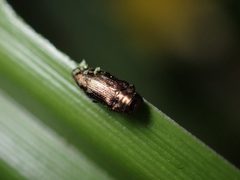
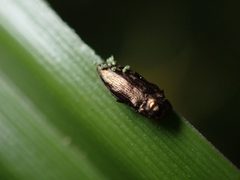
Taphrocerus chevrolati is a of metallic wood-boring beetle in the Buprestidae. It is found in North America, with records from New Mexico, Arizona, and Alberta, Canada. are associated with sedges and grasses, though larval relationships remain unclear. The species was described by Obenberger in 1924.
Pronunciation
How to pronounce Taphrocerus chevrolati: //tæfˈroʊsərəs tʃɛvˈroʊlɑːti//
These audio files are automatically generated. While they are not always 100% accurate, they are a good starting point.
Identification
Taphrocerus chevrolati can be distinguished from other Taphrocerus by its , though specific diagnostic features are not well documented in available sources. are small metallic wood-boring beetles typical of the . Examination of or detailed taxonomic keys would be required for reliable identification.
Images
Habitat
have been collected in association with sedges and grasses in montane and riparian areas. In the Huachuca Mountains of Arizona, specimens were swept from sedges, rushes, and grasses along creek beds. In New Mexico, adults were swept from roadside grasses in relatively dry conditions.
Distribution
North America: recorded from New Mexico, Arizona, and Alberta, Canada. Specific localities include the Sacramento Mountains (Mayhill, Otero County), upper Miller Canyon in the Huachuca Mountains (Cochise County), and Cave Creek Canyon in the Chiricahua Mountains (Cochise County).
Seasonality
have been collected in late May and early June in Arizona and New Mexico, suggesting spring to early summer activity.
Host Associations
- Carex - association swept from sedges in Arizona; larval unconfirmed
- Juncus - association swept from rushes in Arizona; larval unconfirmed
- Poaceae - association swept from grasses in New Mexico and Arizona; larval unconfirmed
Behavior
are and have been collected by sweeping vegetation. In New Mexico, multiple individuals were found in patches of roadside grasses, though the grasses themselves are unlikely to serve as larval . Adults may use grasses and sedges as perch sites or for mating rather than feeding.
Similar Taxa
- Taphrocerus sulcifronsSympatric in Arizona; both occur in sedges and grasses along creek beds in the Huachuca Mountains
- Taphrocerus leoniSympatric in Arizona; T. leoni is larger, shinier, and has distinct pubescent maculations, but may co-occur in similar sedge
More Details
Taxonomic note
Taphrocerus chevrolati was described by Obenberger in 1924. The is part of a North American fauna currently under revision, with specimens from New Mexico representing new state records.
Collection history
Recent collections in 2022 yielded the first New Mexico records for this , with 10 individuals swept from roadside grasses near Mayhill in the Sacramento Mountains. Previous records were primarily from Arizona.