
Agrilus quadriguttatus niveiventris
Horn, 1891
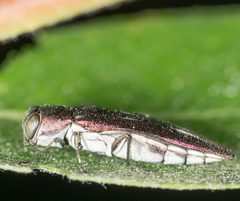
Agrilus quadriguttatus niveiventris is a of jewel beetle in the Buprestidae. It is a small, wood-boring that has been documented as prey of the Cerceris fumipennis. The subspecies is known to occur in North America and has been collected in Missouri. are among the smaller Agrilus utilized by C. fumipennis, with nests often containing multiple individuals to ensure adequate larval food provisioning.
Pronunciation
How to pronounce Agrilus quadriguttatus niveiventris: /ˈæɡrɪləs kwɔːdriːɡʌˈtɑːtəs ˌnɪviˈɛntrɪs/
These audio files are automatically generated. While they are not always 100% accurate, they are a good starting point.
Images
Distribution
North America; specifically documented from Missouri, USA.
Seasonality
activity observed from late May through late June to early July, coinciding with peak buprestid activity in Missouri. Activity declines precipitously in late June and early July.
Diet
Larvae are wood-borers; specific plant associations for this are not documented in available sources.
Ecological Role
Serves as prey for the crabronid Cerceris fumipennis, which provisions nests with paralyzed buprestid beetles for larval development. Multiple individuals of this smaller Agrilus are typically cached per nest to ensure sufficient food for wasp larval development.
Human Relevance
Collected as part of biosurveillance efforts using Cerceris fumipennis to survey for jewel beetles, including detection of emerald ash borer and other Buprestidae.
Similar Taxa
- Agrilus quadriguttatus quadriguttatusNominate ; differences in coloration suggested by subspecies epithet niveiventris ('snowy-white belly')
- Agrilus obsoletoguttatusSimilar small size and habit of being preyed upon by C. fumipennis; distinguished by elytral maculation patterns and pronotal
- Agrilus granulatusOften confused with A. quadriguttatus in collections; distinguished by denser on lower obscuring surface, pronotum with lateral margins strongly sinuate at base, and more abruptly narrowed posteriorly with more acutely rounded tips
Sources and further reading
- BugGuide
- GBIF taxonomy match
- iNaturalist taxon
- Catalogue of Life
- ID Challenge #19 | Beetles In The Bush
- Working with Cerceris fumipennis—Part 2 | Beetles In The Bush
- Hymenoptera | Beetles In The Bush | Page 6
- Cicindelidae | Beetles In The Bush | Page 7
- immatures | Beetles In The Bush | Page 5
- February | 2014 | Beetles In The Bush