
Ernobiini
Pic, 1912
Genus Guides
3- Episernus
- Ernobius(deathwatch cone beetles)
- Paralobium
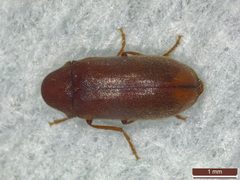
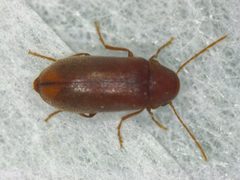
Ernobiini is a tribe of deathwatch and spider beetles in the Ptinidae, containing at least 4 and approximately 70 described . Members of this tribe are small wood-boring beetles whose larvae develop in dead wood or dry plant material. The tribe was established by Pic in 1912 and is classified within the Ernobiinae.
Pronunciation
How to pronounce Ernobiini: //ɛrˈnoʊ.bi.aɪˌni//
These audio files are automatically generated. While they are not always 100% accurate, they are a good starting point.
Identification
Ernobiini can be distinguished from related ptinid tribes by features of the pronotum and , though specific diagnostic characters require examination of . The tribe includes with varied body forms, from the compact Episernus to the more elongate Ernobius. Accurate identification to genus or level requires microscopic examination and comparison with described material.
Images
Habitat
Larvae of Ernobiini develop in dead wood, dry branches, and other dry plant debris. are often found in association with their larval or in buildings where infested wood products are stored.
Distribution
Ernobiini has a broad distribution with records from multiple continents, though specific range limits for the tribe as a whole are poorly documented in literature. Individual show varied distributions: Episernus and Episernomorphus are widespread, while Ernobius and Paralobium have more restricted ranges.
Diet
Larvae feed on dead wood and dry plant material; the specific nutritional requirements (fungal decay, starch content, etc.) vary by and are not well documented for the tribe as a whole.
Life Cycle
Complete with , larva, pupa, and stages. Larvae are wood-borers that tunnel through substrate, with development time varying by and environmental conditions. Specific details of parameters are not established for most species.
Behavior
are generally secretive and may be found under bark or in wood crevices. Some are attracted to light. The characteristic 'ticking' sound produced by some related ptinids (deathwatch beetles) has not been specifically documented for Ernobiini members.
Ecological Role
Larvae contribute to wood decomposition and nutrient cycling in forest . Some may infest seasoned timber or wooden structures, though their economic impact is generally minor compared to other wood-boring beetles.
Human Relevance
Occasional pests of stored wood products and structural timber. Not considered a major economic pest group. Some may be encountered in museums or collections where dried plant material is stored.
Similar Taxa
- XyletininiAnother tribe in Ptinidae with wood-boring larvae; distinguished by antennal structure and pronotal shape
- PtininiTribe containing the familiar spider beetles; members have more globose bodies and different antennal club structure
- AnobiiniTribe containing the common furniture beetle and related ; often have a more pronounced hood-like pronotum
More Details
Taxonomic History
The authorship of Ernobiini has been attributed to Pic (1912), though some sources may cite different dates depending on publication history. The tribal classification within Ptinidae has undergone revision, with some authors historically treating these in different arrangements.
Data Sources
Information synthesized from ITIS, Catalogue of Life, GBIF, and BugGuide.net databases. Direct -level biological data for Ernobiini is sparse in primary literature; most observations pertain to the broader Ptinidae.