
Anobiini
death-watch beetles
Genus Guides
3- Anobium(furniture beetles)
- Hemicoelus(death-watch beetles)
- Platybregmus
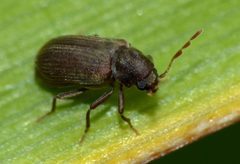
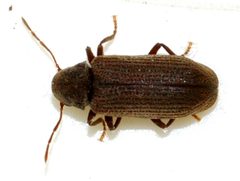
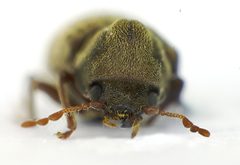
Anobiini is a tribe of beetles within the Ptinidae, commonly known as death-watch beetles. The tribe contains at least 6 and approximately 20 described . Members of this tribe are wood-boring beetles known for their association with timber and wooden structures. The "death-watch" derives from the tapping sounds produced by some species, historically associated with superstitions about impending death.
Pronunciation
How to pronounce Anobiini: /ˌænəˈbaɪəˌnaɪ/
These audio files are automatically generated. While they are not always 100% accurate, they are a good starting point.
Identification
Anobiini can be distinguished from other Ptinidae tribes by a combination of morphological features, though specific diagnostic traits vary by . Members of the tribe generally share characteristics typical of the Ptinidae, including compact bodies and clubbed . The genus Anobium is the type genus and includes with distinctive pronotal shapes. Identification to genus level requires examination of specific structural features such as antennal club composition, pronotal margins, and elytral surface texture. Specimens should be compared with reference collections for reliable determination.
Images
Distribution
Members of Anobiini have been documented across multiple continents, with records from North America, Europe, and other regions. The tribe includes both native and introduced , with some showing broader geographic ranges than others. Distribution varies significantly by genus; for example, Microbregma and Platybregmus have more restricted ranges compared to Anobium.
Diet
Larvae of Anobiini are wood-borers, feeding on seasoned timber, dead wood, and wooden materials. The Anobium includes that attack structural timber, with Anobium punctatum (common furniture beetle) being a notable pest of hardwoods. Specific wood preferences vary by species, with some specializing in particular tree species or wood conditions.
Host Associations
- wood (seasoned timber) - larval food sourcelarvae bore into and consume wood, particularly hardwoods
- structural timber - and food sourcesome associated with wooden buildings and furniture
Life Cycle
Anobiini undergo complete with , larval, pupal, and stages. Larvae are the primary feeding stage and cause damage to wood through boring activity. Development time varies considerably depending on wood moisture content, temperature, and nutritional quality of the substrate. Some may require several years to complete development in dry conditions.
Behavior
of some Anobiini produce audible tapping sounds by striking their against wood surfaces, a that generates the "death-watch" . This tapping serves as a communication signal, likely for mate location. Larvae remain concealed within wood galleries and do not emerge until and adult .
Ecological Role
As decomposers of dead wood, Anobiini contribute to nutrient cycling in forest . In natural settings, they break down fallen branches and standing dead trees. Their wood-boring activity creates spaces used by other organisms.
Human Relevance
Several Anobiini are significant pests of wooden structures, furniture, and museum collections. Anobium punctatum is a globally distributed pest causing economic damage to hardwood timber and antiques. are difficult to detect until exit holes appear, by which time substantial internal damage may have occurred. Management requires control of moisture levels and, in some cases, chemical or heat treatment.
Similar Taxa
- other Ptinidae tribesshare -level characteristics including compact body form and clubbed ; distinguished by tribal-level morphological features requiring detailed examination
- Lyctinae (powderpost beetles)also wood-boring pests of seasoned timber; distinguished by different antennal structure and larval gallery characteristics
More Details
Taxonomic history
Anobiini has undergone taxonomic revision, with the placement shifting historically between Anobiidae and Ptinidae. Current classification places the tribe in Ptinidae based on phylogenetic studies. The tribe includes the type Anobium Fabricius, 1775.
Data sources
Taxonomic information compiled from ITIS, Catalogue of Life, GBIF, and BugGuide.net databases. iNaturalist records indicate 1,570 observations, suggesting moderate documentation of the tribe's members.