
Ernobius
C.G. Thomson, 1859
deathwatch cone beetles
Species Guides
4- Ernobius crotchii(Crotch's deathwatch beetle)
- Ernobius filicornis
- Ernobius granulatus
- Ernobius mollis(pine knot borer)
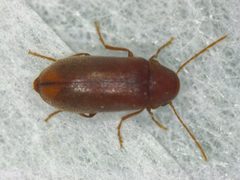
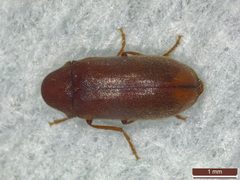
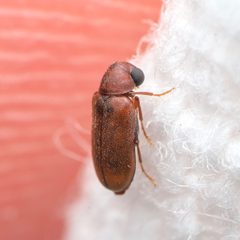
Ernobius is a of small beetles in the Ptinidae (formerly Anobiidae), containing approximately 90 distributed primarily across North America, Europe, and North Africa. Species are commonly known as deathwatch cone beetles due to their specialized association with conifer cones. Several species are significant forest pests that reduce seed storage in commercially important conifers.
Pronunciation
How to pronounce Ernobius: /ɛrˈnoʊ.bi.əs/
These audio files are automatically generated. While they are not always 100% accurate, they are a good starting point.
Images
Habitat
Cones of coniferous trees, particularly of Pinus and Picea. Specific documented associations include Pinus radiata cones and Picea mariana (black spruce) cones.
Distribution
North America, Europe, and North Africa. Specific regional records include Newfoundland (Ernobius bicolor) and Scandinavia (Denmark, Norway, Sweden).
Seasonality
from cones peaks February through April for at least some .
Host Associations
- Pinus radiata - infests conesErnobius punctulatus
- Picea mariana - infests cones, reduces seed storageErnobius bicolor
- Fusarium subglutinans f. sp. pini - carries fungal Ernobius punctulatus ; 30.1% carry , with seasonal variation 0-67%
- Cephalonomia utahensis - of larvaeHymenoptera: Bethylidae; frequently observed in late-instar larvae of Ernobius punctulatus
Life Cycle
Larval development occurs within conifer cones. Late-instar larvae of Ernobius punctulatus have been observed with the Cephalonomia utahensis.
Behavior
emerge from cones with seasonal peaks. Co-occurrence with other cone-feeding beetles has been documented; Ernobius punctulatus cohabited 26% of cones with Conophthorus radiatae. Potential for interspecific transmission of fungal between .
Ecological Role
Seed in conifer cones, reducing natural seed storage. Potential of pitch canker fungus (Fusarium subglutinans f. sp. pini). for that may further transmit fungal to other prey .
Human Relevance
Ernobius bicolor reduces black spruce seed storage in Newfoundland, with up to 50% of cone crops damaged at some locations and damage averaging 18% across 33 locations (1963-1979). Substantial seed losses occur when infested cones are harvested for seed extraction, threatening natural stand after harvest or fire.
Similar Taxa
- ConophthorusBoth infest conifer cones; Ernobius punctulatus co-occurred with Conophthorus radiatae in 26% of Pinus radiata cones, but differs in (Anobiidae/Ptinidae vs. Curculionidae: Scolytinae) and likely .
Sources and further reading
- BugGuide
- Wikipedia
- GBIF taxonomy match
- iNaturalist taxon
- NCBI Taxonomy
- Catalogue of Life
- THE MORPHOLOGY AND BIOLOGY OF ERNOBIUS MOLLIS L. (COLEOPTERA—ANOBIIDAE)
- A Deathwatch Cone Beetle (Anobiidae: Ernobius bicolor) Reduces the Natural Storage of Black Spruce Seed In Newfoundland
- QUANTITATIVE AND SEASONAL ASSOCIATION OF THE PITCH CANKER FUNGUS, FUSARIUM SUBGLUTINANS F. SP. PINI WITH CONOPHTHORUS RADIATAE (COLEOPTERA: SCOLYTIDAE) AND ERNOBIUS PUNCTULATUS (COLEOPTERA: ANOBIIDAE) WHICH INFEST PINUS RADIATA