
Stephanopachys substriatus
(Paykull, 1800)
powder-post beetle, Pine Powderpost Beetle
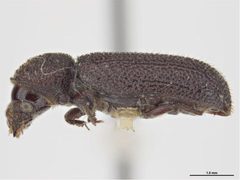
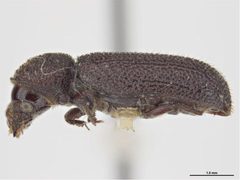
Stephanopachys substriatus is a of horned powder-post beetle in the Bostrichidae. It has a Holarctic distribution, occurring in Europe, Northern Asia (excluding China), and North America. The species is commonly known as the powder-post beetle or Pine Powderpost , reflecting its association with coniferous wood degradation.
Pronunciation
How to pronounce Stephanopachys substriatus: //ˌstɛfəˌnoʊˈpækɪs sʌbˈstraɪətəs//
These audio files are automatically generated. While they are not always 100% accurate, they are a good starting point.
Identification
As a member of the Stephanopachys, this possesses the characteristic horns or on the pronotum typical of horned powder-post beetles. It can be distinguished from other Bostrichidae by the combination of its striated and pronotal armature. Specific identification requires examination of antennal club structure, pronotal horn configuration, and elytral striation patterns.
Images
Habitat
Associated with dead or dying coniferous wood, particularly pine. The inhabits forested and woodland environments where suitable material is available for larval development.
Distribution
Holarctic: Europe, Northern Asia (excluding China), and North America. Distribution records confirm presence across these broad geographic regions.
Diet
Larvae feed on wood, specifically coniferous wood. The "Pine Powderpost " indicates specialization on Pinus and related conifer . may also feed on wood or fungal material associated with their larval galleries.
Host Associations
- Pinus - larval food sourceprimary implied by "Pine Powderpost "
- coniferous wood - larval food sourcegeneral category for the
Life Cycle
Complete with , larval, pupal, and stages. Larvae bore into and feed within coniferous wood, creating tunnels that reduce timber to fine powder-like . Development occurs within the wood, with adults emerging to mate and oviposit on new suitable substrates.
Behavior
are capable of boring into wood. Larval feeding reduces infested timber to a fine, powdery , characteristic of powder-post beetles. The has been observed in association with dead grapevine (Vitis sp.) in at least one record, suggesting potential flexibility in use or attraction to dying wood in general.
Ecological Role
Decomposer of dead and dying coniferous wood. Contributes to nutrient cycling in forest by breaking down lignocellulosic material. May accelerate degradation of snags and downed timber.
Human Relevance
Potential pest of seasoned pine lumber and wooden structures. The powder-post habit can cause structural damage to timber, reducing wood to a fine powder and compromising integrity. Management may be required when occur in stored lumber or finished wood products.
Similar Taxa
- Stephanopachyscongeneric share pronotal horns and general ; specific identification requires detailed examination of striation patterns and horn configuration
- Lyctus spp.other powder-post beetles with similar wood-boring habits and production; distinguished by -level characters including antennal club structure and pronotal form
- Dinoderus spp.related Dinoderinae with similar ; separated by pronotal armature and body proportions
More Details
Taxonomic history
Originally described as Apate substriatus by Paykull in 1800, later transferred to Stephanopachys. The basionym reflects early classification within a broader concept of the Bostrichidae.
Observation records
iNaturalist records (13 observations as of source date) suggest this is infrequently encountered by citizen scientists, possibly due to its concealed lifestyle within wood or limited geographic coverage of observers.