
Sphodrini
Laporte, 1834
Genus Guides
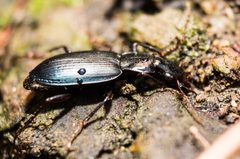
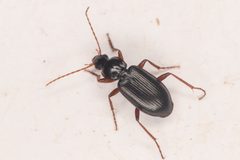
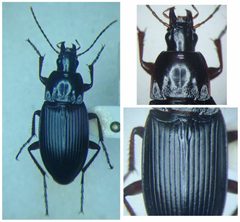
3Sphodrini is a tribe of ground beetles in the Carabidae, Platyninae. The tribe comprises more than 30 and at least 910 described . Members of this tribe exhibit considerable diversity in geographic distribution, ranging from the Himalayas and East Asia to Europe and the Middle East. Some genera, such as Pristosia, show complex biogeographic patterns associated with Tertiary Tibetan faunal components and Himalayan uplift.
Images
Habitat
High-elevation montane environments are documented for multiple , with records from 1650–3960 m elevation in the Himalayas, Turkey, and Papua New Guinea. Some species occupy mesovoid shallow substratum (MSS) , as evidenced by collection using subterranean pitfall traps.
Distribution
Widespread across the Palearctic and Oriental regions, with documented occurrence in: Europe (Bulgaria, Montenegro), Turkey, the Caucasus and Middle East (Iraqi Kurdistan), Central Asia (Pakistan, Afghanistan), the Himalayas (Nepal, India, China), East Asia (South Korea, Japan, China: Yunnan), and Southeast Asia. The Pristosia shows disjunct distribution patterns across the Western, Central, and Eastern Himalayas.
Similar Taxa
- PlatyniniBoth tribes belong to Platyninae and share general ground beetle ; Sphodrini distinguished by specific tribal-level characters in male genitalia and elytral structure
- PterostichiniOften sympatric and superficially similar in body form; Sphodrini members typically lack the distinctive setal patterns and pronotal shapes characteristic of Pterostichini
Sources and further reading
- BugGuide
- Wikipedia
- iNaturalist taxon
- NCBI Taxonomy
- Catalogue of Life
- Pristosia Motschulsky, 1865 from the Nepal Himalaya: Taxonomy and Biogeography (Coleoptera: Carabidae: Sphodrini)
- Taxonomic, nomenclatural, and faunistic records for species in tribes Melaenini, Moriomorphini, Pterostichini, Licinini, and Sphodrini (Coleoptera: Carabidae)
- New and unpublished data about Bulgarian ground beetles from the tribes Pterostichini, Sphodrini and Platynini (Coleoptera, Carabidae)
- Two new species of the genus Laemostenus Bonelli sg. Antisphodrus Schaufuss from Turkey (Coleoptera: Carabidae: Sphodrini)
- Discovery of Synuchuscongruus (Morawitz, 1862) (Coleoptera, Carabidae, Sphodrini) in Europe.
- The complete mitochondrial genome of a ground beetle Synuchus nitidus (Carabidae: Harpalinae: Sphodrini) from South Korea.