
Synuchus
Gyllenhal, 1810
Species Guides
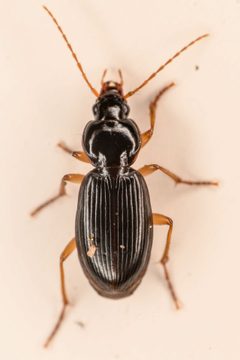
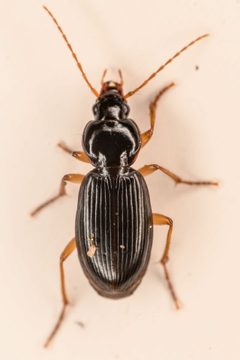
2Synuchus is a of ground beetles (Carabidae) comprising over 80 described distributed across the Palearctic and Nearctic regions. The genus exhibits notable variation in ability, with some species fully winged and capable of flight () while others have reduced or absent hindwings and are flightless ( or brachypterous). This flight has contributed to diversification and differential patterns of genetic differentiation among species. Certain species have been proposed as bioindicators for monitoring climate change effects due to their sensitivity to temperature stress and continuity.
Pronunciation
How to pronounce Synuchus: /sɪˈnjuːkəs/
These audio files are automatically generated. While they are not always 100% accurate, they are a good starting point.
Identification
-level identification within Synuchus requires examination of microsculpture patterns on the , depth of tarsal furrows, and detailed dissection of male genitalia ( ). Some species pairs are extremely similar in external habitus and have been historically confused in collections; for example, S. congruus and S. vivalis were distinguished primarily through subtle differences in elytral microsculpture and aedeagus structure. Wing dimorphism may be present within some species, with individuals showing variation in hindwing development.
Images
Habitat
vary by and include forests (coniferous, deciduous, mixed), forest edges, clearings, bush thickets, meadows, fields, wooded strips, wetlands, and riverbanks. Some species occupy lowland agricultural and semi-natural landscapes, while flightless species appear restricted to mountainous environments with cool temperatures, heavy winter precipitation, large seasonal variation in temperature and precipitation, and low habitat continuity.
Distribution
Native to the Palearctic region (Europe, Russia, Kazakhstan, China, Korea, Japan, Taiwan, Nepal, India, Pakistan, Iran) with some extending into the Nearctic (United States, Canada, Mexico). The shows highest in East Asia, particularly Japan, China, and Taiwan. At least one species (S. congruus) has been introduced to Europe (Belarus, Latvia, Poland) prior to 2007, likely via plant stock importation.
Seasonality
have been collected from spring through late autumn (March to November) for at least some ; specific seasonal patterns vary among species and geographic locations.
Diet
At least one (S. nitidus) is confirmed to be based on gut content analysis.
Behavior
ability varies dramatically among : some are and capable of active flight, while others are flightless () with reduced or absent hindwings, no flight muscles, and dependence on for movement and . Flightless species show higher genetic differentiation among , likely due to reduced .
Ecological Role
As , at least some occupy high positions where changes may have significant impact. Flightless species in particular may serve as sensitive indicators of continuity and climate change effects due to their limited ability and sensitivity to temperature stress.
Human Relevance
Proposed as bioindicators for monitoring global warming effects, particularly with flightless and temperature-sensitive . At least one species (S. congruus) has been introduced to Europe, potentially via horticultural trade.
Similar Taxa
- S. vivalisExtremely similar external to S. congruus; distinguished by elytral microsculpture patterns, tarsal furrow depth, and morphology. The two are often sympatric where S. congruus has been introduced.
- Other Carabidae genera in PlatyninaeSynuchus may resemble other sphodrine ground beetles in general habitus; definitive identification requires examination of male genitalia and detailed microsculpture patterns.
Sources and further reading
- BugGuide
- Wikipedia
- GBIF taxonomy match
- iNaturalist taxon
- NCBI Taxonomy
- Catalogue of Life
- Relationships among flight traits, genetic differentiation and habitats in two closely related species of the genus Synuchus (Coleoptera: Carabidae)
- Biology of <i>Synuchus nitidus</i>(Coleoptera: Carabidae)as a Bioindicator of Global Warming—Wing Morphology, Reproductive Strategy, and Feeding Habits 温暖化の指標種としてのオオクロツヤヒラタゴミムシ(コウチュウ目:オサムシ科)の生態—翅の形態,繁殖様式,および食性
- Discovery of Synuchuscongruus (Morawitz, 1862) (Coleoptera, Carabidae, Sphodrini) in Europe.
- The complete mitochondrial genome of a ground beetle Synuchus nitidus (Carabidae: Harpalinae: Sphodrini) from South Korea.