
Lebia scapula
G.Horn, 1885
Lebia scapula is a of foliage ground beetle in the Carabidae, first described by George Henry Horn in 1885. The Lebia comprises relatively small, often brightly colored beetles that are attracted to lights at night. This species is known from North America, with records from the United States and Mexico.
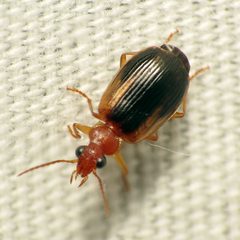
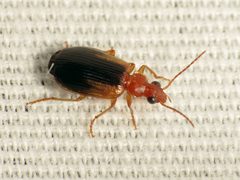
Pronunciation
How to pronounce Lebia scapula: /ˈlɛ.bi.ə ˈskæ.pjʊ.lə/
These audio files are automatically generated. While they are not always 100% accurate, they are a good starting point.
Identification
Lebia scapula is a small ground beetle in the Lebia, which is characterized by often bright metallic wing covers that draw attention despite the beetles' small size. Specific diagnostic features for L. scapula are not documented in available sources. The genus can be distinguished from other small carabids by the combination of small body size, frequently colorful or metallic , and association with foliage .
Images
Distribution
United States; Mexico; North America
Behavior
Has been observed attracted to lights at night, a common in the Lebia.
Similar Taxa
- Lebia spp.Other in the Lebia share the characteristic small size and often bright metallic coloration, requiring examination of specific morphological characters for definitive identification.
- Other small CarabidaeSmall ground beetles in other may resemble Lebia scapula in general habitus, but Lebia are distinguished by their frequent metallic coloration and association with foliage.
Sources and further reading
- BugGuide
- Wikipedia
- GBIF taxonomy match
- iNaturalist taxon
- Just in the tick of time: American dog tick, Dermacentor variabilis, and Black-legged tick, Ixodes scapularis — Bug of the Week
- Another Invasive Mosquito Species Arrives in Florida
- Cold weather arrives but don’t let your guard down for a tick attack: Blacklegged tick, Ixodes scapularis — Bug of the Week
- Bug Eric: New Mexico Night Bugs
- An Up-Close Look at the Tiny Sensory Pits That Ticks Use to Smell
- New Study Reveals Emerging Cases of Babesiosis in the Mid-Atlantic Region