Elaphrus lindrothi
Goulet, 1983
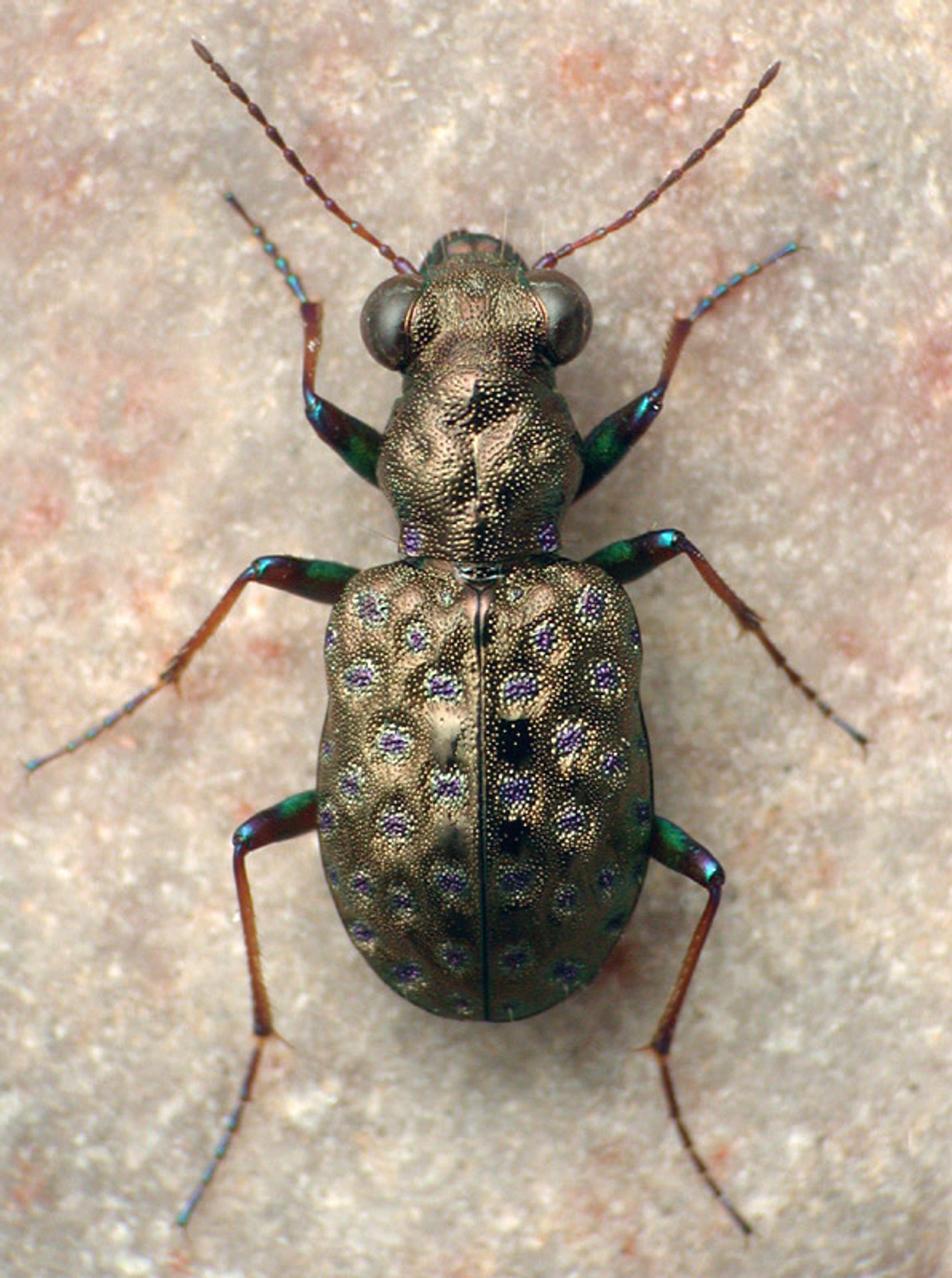
Elaphrus lindrothi is a of ground beetle in the Elaphrinae, described by Goulet in 1983. It belongs to a known for species that closely resemble tiger beetles (Cicindelinae), often leading to misidentification by collectors. The species is native to the United States and is part of the North American fauna of Elaphrus, a genus of true ground beetles (Carabidae) with distinctive morphological adaptations.
Pronunciation
How to pronounce Elaphrus lindrothi: //ɪˈlæfrəs lɪnˈdroʊθaɪ//
These audio files are automatically generated. While they are not always 100% accurate, they are a good starting point.
Identification
Members of Elaphrus are frequently confused with tiger beetles due to their similar overall body shape, large , and active ground-dwelling habits. Elaphrus lindrothi can be distinguished from tiger beetles by examining antennal structure and other carabid characteristics; true tiger beetles possess distinctive with fewer segments and modified palps. Within the , E. lindrothi requires comparison with closely related North American , particularly other in the western and northern United States. The genus Elaphrus exhibits metallic coloration and streamlined bodies that contribute to the tiger resemblance.
Images
Habitat
As with other Elaphrus , E. lindrothi likely inhabits moist ground near water sources, including stream banks, lake margins, and wet meadows. These habitats align with the general ecological preferences documented for the , which specializes in riparian and wetland edge environments.
Distribution
United States; North America. Distribution records indicate presence in the USA, with the described from North American material.
Behavior
Members of Elaphrus are active ground beetles that run rapidly over open ground, that contributes to their superficial resemblance to tiger beetles. They are .
Ecological Role
As a ground beetle, E. lindrothi functions as a in its , contributing to in riparian and wetland .
Similar Taxa
- Cicindela (tiger beetles)Elaphrus share large , metallic coloration, streamlined bodies, and rapid running with tiger beetles, leading to frequent collector misidentification. Tiger beetles can be distinguished by their modified with fewer segments and different palp structure.
- ColliurisAnother carabid that resembles tiger beetles and may be confused with Elaphrus by collectors.
- AsaphidionA recently introduced carabid in some regions that shares the tiger -like appearance and may be mistaken for Elaphrus.
- Opisthius richardsoniA carabid that has been mislabeled as Elaphrus in collections due to superficial resemblance.
More Details
Taxonomic history
Described by Henri Goulet in 1983, the epithet honors Carl H. Lindroth, a prominent entomologist who contributed extensively to the study of Carabidae.