
Parvindela cursitans
(LeConte, 1856)
Ant-like Tiger Beetle
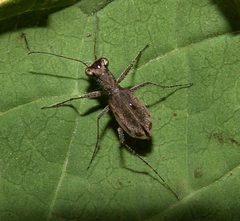
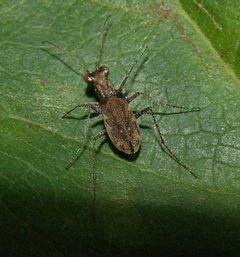
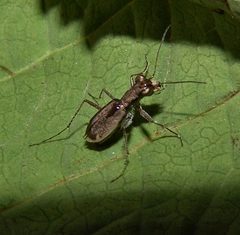
Parvindela cursitans, commonly known as the -like Tiger , is a small, flightless tiger beetle distributed across the central United States. measure 6–8 mm in length and exhibit cryptic bronze coloration with green pitting on the . The species inhabits bottomland forest with sandy loam soils, particularly along major river systems. Unlike most tiger beetles, it is restricted to shaded forest understories rather than open, sunny areas. The species was historically rare in Missouri, known from only a single specimen until 2010, but subsequent surveys have revealed robust along the Mississippi River corridor.
Pronunciation
How to pronounce Parvindela cursitans: /pɑrˈvɪndɛlə ˈkɜrsɪˌtænz/
These audio files are automatically generated. While they are not always 100% accurate, they are a good starting point.
Identification
Distinguished from other tiger beetles by its exceptionally small size, cryptic bronze coloration with green elytral pitting, and restriction to shaded forest understory . Most similar to other small Cylindera/Parvindela , but separable by habitat preference and distribution. The combination of small size, metallic bronze color, and rapid -like movement distinguishes it from larger, more brightly colored tiger beetles in sympatric habitats. are difficult to detect until they move, appearing as small dark specks on the soil surface.
Images
Appearance
are diminutive tiger beetles measuring 6–8 mm in length. The body is slender and cryptically colored in metallic bronze tones. The bear distinct green pitting that becomes visible upon close examination. The overall appearance and rapid, darting movements superficially resemble small spiders or ants. The features large, prominent and well-developed typical of tiger beetles. Legs are long and adapted for rapid running.
Habitat
Bottomland forests adjacent to major river systems, specifically on ridge and swale topography with sandy loam soils. Occupies open forest understory dominated by poison ivy (Toxicodendron radicans) and trumpet creeper (Campsis radicans). Avoids wet sand beaches at water's edge and sand-free soils further from rivers. Restricted to shaded forest rather than open, sunny areas typical of most tiger beetles. In Arkansas, also occurs in disturbed, mowed areas with patches of barren sandy loam soil.
Distribution
Central United States: documented from Nebraska, Missouri, Arkansas, and presumably other states along the Mississippi River system. In Missouri, confirmed from five sites in Mississippi County and New Madrid County along the Mississippi River, and from Dunklin County along the St. Francis River. The Arkansas occurs at Chalk Bluff Natural Area in the Upper Mississippi Alluvial Plain.
Seasonality
active during summer months. In Missouri, surveys conducted from mid-June through summer have documented active adults. Peak activity period appears to be mid-June to August based on survey data.
Life Cycle
Larval unknown. observed in mid-summer, suggesting or partially typical of temperate tiger beetles. No larval burrows have been reported from occupied , possibly due to cryptic placement or small burrow diameter.
Behavior
are extremely rapid runners, darting quickly between cover objects when disturbed. They are highly skittish and difficult to approach for photography or collection. When pursued, adults often run toward and hide against grass clumps or beneath fallen leaves and debris. Under leaf cover, they may remain motionless even when the covering object is carefully removed, resuming activity only after prolonged exposure. Adults have been observed to habituate to observer presence in some individuals, eventually resuming normal activity despite close proximity. Flightless; relies exclusively on running for escape. Activity restricted to shaded forest understory; never observed in open sunny areas.
Ecological Role
Predatory insect, likely feeding on small in forest floor litter. Occupies a distinctive microhabitat among tiger beetles, being the only in its region specialized for shaded forest understory with sandy loam soils. May serve as prey for larger invertebrates and small vertebrates.
Human Relevance
Subject of conservation interest due to historical rarity in Missouri. Survey efforts have documented that the is more widespread and abundant than previously believed, occurring in river corridor that remain relatively common despite agricultural conversion of the surrounding landscape. No known economic importance. Occasionally collected by entomologists; difficult to photograph due to small size and skittish .
Similar Taxa
- Parvindela celeripesSimilar small size and former congeneric status, but distinguished by (loess hilltop prairie vs. bottomland forest) and distribution (western Missouri vs. Mississippi lowlands)
- Cicindela punctulataSympatric in some and similar in general form, but larger, more brightly colored, and prefers open, disturbed areas rather than shaded forest understory
- Tetracha virginica tiger found in similar sandy , but larger, with different body proportions and nocturnal activity pattern
Misconceptions
Previously considered extremely rare and possibly imperiled in Missouri based on single historical specimen; subsequent surveys revealed robust, widespread in appropriate . The ' restriction to forest understory contrasts with published reports of wet meadow habitats in Nebraska, suggesting either geographic variation in habitat use or mischaracterization of Nebraska habitats.
More Details
Taxonomic History
Formerly classified in Cylindera as Cylindera cursitans, then Cicindela cursitans, now placed in Parvindela based on phylogenetic studies. The epithet 'cursitans' refers to the running .
Conservation Status Reassessment
Initial concern for conservation status in Missouri based on extreme rarity (single specimen known until 2010) proved unfounded; now considered secure in state due to abundant suitable in Mississippi River corridor and documented robust at multiple sites.
Photographic Challenge
Considered one of the more difficult North American tiger beetles to photograph in the field due to small size, cryptic coloration, rapid movement, and strong escape response. Successful field photography typically requires exposing individuals hiding under leaf litter or using extreme patience to habituate active .