
Scaphinotus velutinus
(Ménétriés, 1843)
Velvet Snail-eating Beetle
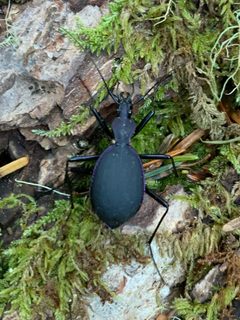
Scaphinotus velutinus, commonly known as the velvet snail-eating , is a flightless ground beetle in the Carabidae. It is to western North America, with confirmed records from California and Oregon. The species inhabits coniferous forest and is characterized by reduced wings (brachyptery). As a member of the Scaphinotus, it is specialized for on terrestrial snails.
Pronunciation
How to pronounce Scaphinotus velutinus: //ˌskæfɪˈnoʊtəs vɛˈluːtɪnəs//
These audio files are automatically generated. While they are not always 100% accurate, they are a good starting point.
Identification
Identification relies on the combination of brachypterous , velvety body texture, and geographic restriction to coniferous forests of California and Oregon. Within the Scaphinotus, -level identification requires examination of genitalic structures and detailed external . The species may be distinguished from eastern North American by distribution alone.
Images
Habitat
Inhabits coniferous forests in western North America. Specific microhabitat preferences within these forests have not been documented, but are typically associated with moist forest floor conditions where prey snails are abundant.
Distribution
to western North America. Confirmed records from California and Oregon. GBIF records indicating Alaska presence appear erroneous and likely represent data quality issues; the ' actual range is restricted to the Pacific coastal states.
Diet
As a member of the Scaphinotus, on terrestrial snails is inferred from genus-level specialization, though direct observation of feeding in this has not been documented.
Behavior
The brachypterous condition indicates obligate ground-dwelling habits with limited capability. are presumably or , as is typical for Carabidae, though specific activity patterns for this are undocumented.
Ecological Role
Likely functions as a of terrestrial gastropods in coniferous forest , potentially contributing to regulation of snail . The flightless condition suggests strong fidelity and limited ability.
Similar Taxa
- Scaphinotus angusticollisOverlapping distribution in Pacific Northwest; distinguished by differences in elytral and male genitalia.
- Scaphinotus marginatusSympatric in California coniferous forests; differs in body proportions and surface texture.
- Other Scaphinotus species-wide similarity in general form; -level identification requires detailed morphological examination including genitalia.
More Details
Nomenclatural History
Originally described as Cychrus velutinus by Ménétriés in 1843, subsequently transferred to the Scaphinotus. The basionym reflects historical classification within the snail-associated ground beetles.
Flightlessness and Conservation Implications
Brachyptery in this indicates limited capacity and potential vulnerability to fragmentation. Coniferous forest in western North America ongoing pressure from logging, fire suppression, and climate change.