
Kalotermes
Hagen, 1853
Species Guides
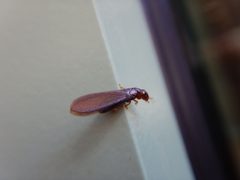
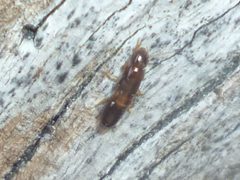
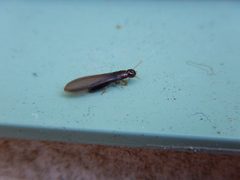
1- Kalotermes approximatus(Dark Southern Drywood Termite)
Kalotermes is a of drywood termites in the Kalotermitidae, considered one of the most primitive families. The genus contains multiple distributed across tropical and subtropical regions, including North America, Australia, and Europe. Species in this genus are characterized by their ability to colonize dry wood without requiring contact with soil. The genus has been studied for its social , differentiation, and digging .
Pronunciation
How to pronounce Kalotermes: /ˌkæloʊˈtɜrmiːz/
These audio files are automatically generated. While they are not always 100% accurate, they are a good starting point.
Identification
Members of Kalotermes can be distinguished from other by morphological features of the soldier and , including capsule shape and structure. -level identification typically requires examination of wing venation patterns and soldier mandible . Kalotermes flavicollis, a well-studied European species, has been used as a model for understanding caste differentiation and social in drywood termites.
Images
Habitat
in this inhabit dry wood environments and do not require soil contact for colony establishment. Kalotermes approximatus has been documented in North Carolina and South Carolina, where it occupies wooden structures and dead wood in forested areas. Kalotermes serrulatus occurs in tropical Queensland, Australia.
Distribution
The has a broad distribution including North America (eastern United States), Australia (Queensland), and Europe (Mediterranean region). Specific documented locations include North Carolina, South Carolina, and tropical Queensland, Australia.
Diet
Dry wood; in this feed on cellulose in wood that is not in contact with soil.
Behavior
Kalotermes flavicollis exhibits digging influenced by the presence of the royal pair (reproductive individuals). The royal pair plays a role in regulating social and differentiation within colonies.
Ecological Role
As decomposers of dead wood, in this contribute to nutrient cycling in forest . They facilitate the breakdown of cellulose in dry wood .
Human Relevance
Some in this are considered structural pests due to their ability to infest dry wooden structures without soil contact. Research on Kalotermes has contributed to understanding social organization, differentiation, and control methods for drywood termites.
Similar Taxa
- NeotermesAlso in Kalotermitidae; Neotermes are dampwood termites requiring higher moisture content in wood, whereas Kalotermes species are true drywood termites.
- CryptotermesAnother in Kalotermitidae; Cryptotermes typically have phragmotic soldiers with plug-shaped for blocking nest entrances, while Kalotermes soldiers have different head morphologies.
- ReticulitermesSubterranean termites in ; Reticulitermes requires soil contact for moisture and colony establishment, unlike the drywood-adapted Kalotermes.
More Details
Taxonomic Note
Kalotermitidae is considered one of the most primitive of , retaining characteristics of ancestral termite lineages. The Kalotermes has been extensively studied for its hormonal regulation of differentiation and social .
Research Significance
Kalotermes flavicollis has served as an important model organism for studying the endocrine basis of differentiation in , including the role of in soldier and reproductive development.
Sources and further reading
- BugGuide
- Wikipedia
- GBIF taxonomy match
- iNaturalist taxon
- NCBI Taxonomy
- Catalogue of Life
- How Termites 'Looking for Love' Landed in the News | Bug Squad
- Bravo to Vernard Lewis and Margaret Collins: Two Legendary Entomologists | Bug Squad
- taxonomy | Blog - Part 18
- What's That Termite? Artificial Intelligence Might Have the Answer
- Kalotermes approximatus Habitat in South Carolina
- Distribution of Kalotermes approximatus (Isoptera: Kalotermitidae) in North Carolina
- A NEW SPECIES OF KALOTERMES HAGEN (ISOPTERA:KALOTERMITIDAE) FROM TROPICAL QUEENSLAND *
- The Role of Hormones in Social Polymorphism and Reproduction in Kalotermes flavicollis Fabr.
- Digging behaviour and royal pair's influence inkalotermes flavicollis(Isoptera, kalotermitidae)