
Archotermopsidae
Engel, Grimaldi & Krishna, 2009
Dampwood termites
Genus Guides
1- Zootermopsis(dampwood termites)
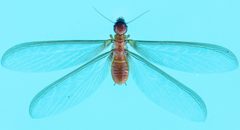
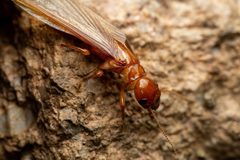
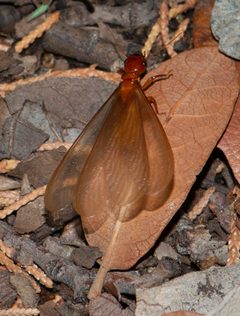
Archotermopsidae is a small of primitive in the order Blattodea, commonly known as dampwood termites. The family was established in 2009 when five were split from the former . As of 2022, it contains two extant genera: Archotermopsis and Zootermopsis, with five living . These termites are characterized by their dependence on moist or decaying wood and their limited economic importance compared to other termite families.
Pronunciation
How to pronounce Archotermopsidae: /ˌɑːrkəˌtɜːrˈmɒpsədeɪ/
These audio files are automatically generated. While they are not always 100% accurate, they are a good starting point.
Identification
Archotermopsidae can be distinguished from other by their association with damp or decaying wood rather than dry wood or soil. They lack the specialized adaptations for arid environments seen in some other termite families. The family contains notably large termite , with Zootermopsis including some of the largest termites in North America. Soldiers possess (biting) mouthparts rather than the (nozzle-headed) form found in some other families.
Images
Habitat
Strictly associated with moist wood environments. Colonies inhabit damp, decaying, or water-damaged wood in forests, including fallen logs, stumps, and dead standing trees. They require high moisture content in their food substrate and do not establish colonies in dry conditions. Some occupy coastal or riparian forests where humidity remains consistently elevated.
Distribution
Disjunct distribution with representatives in western North America (Zootermopsis), and South and Southeast Asia (Archotermopsis). The Zootermopsis occurs from British Columbia to central California, primarily in coastal and montane forests. Archotermopsis is found in parts of India, Nepal, and surrounding regions.
Diet
Cellulose from wood, specifically wood with high moisture content or in early stages of decay. They do not forage for food away from their nesting substrate. The digestive process relies on gut including flagellate protists (in more primitive members) and bacteria to break down cellulose.
Life Cycle
Colonies are relatively small compared to other , typically containing hundreds to a few thousand individuals rather than millions. Colony foundation is initiated by primary reproductives () after . Development includes , nymph, and stages with gradual . Nymphs may develop into , soldiers, or reproductives depending on differentiation cues. Colony development is slow, and mature colonies may take years to establish.
Behavior
Colonies remain confined to their wood substrate and do not construct extensive foraging tunnels or soil galleries. They maintain their moisture requirements by selecting appropriate rather than by active environmental modification. emerge for during favorable weather conditions. Soldiers defend the colony using their .
Ecological Role
Decomposers of damp wood in forest , accelerating the breakdown of fallen timber and contributing to nutrient cycling. Their activity creates heterogeneity in decaying wood used by other organisms. They represent a relatively primitive lineage within , providing insight into the evolutionary history of eusociality in the group.
Human Relevance
Minimal structural pest status. They rarely infest buildings and only when wood has been pre-damaged by moisture or decay. They are not considered significant economic pests because they do not attack sound, dry timber. Control is generally unnecessary unless water-damaged wood is present in structures; moisture remediation is the primary management strategy. Occasionally encountered during forest management or when harvesting timber from moist .
Similar Taxa
- StolotermitidaeFormerly included in Archotermopsidae together; separated in 2009 based on phylogenetic analysis. Stolotermitidae contains Porotermes and Stolotermes, which share the dampwood habit but have distinct geographic distributions (Southern Hemisphere) and morphological differences.
- Hodotermopsidae Hodotermopsis was moved to this newly elevated in 2022; previously part of Archotermopsidae. Hodotermopsidae occupy similar moist wood in East Asia.
- RhinotermitidaeSubterranean termites that may be confused with dampwood termites in some regions, but maintain soil contact, construct mud tubes, and include significant structural pests unlike Archotermopsidae.
More Details
Taxonomic instability
This has undergone substantial recent revision. The 2009 establishment of Archotermopsidae split , and the 2022 elevation of Hodotermopsidae further reduced Archotermopsidae to two extant . These changes reflect ongoing phylogenetic research using molecular data.
Evolutionary significance
Archotermopsidae retains characteristics considered ancestral for , including the retention of flagellate gut in some and relatively simple colony organization. The Zootermopsis has been important in research on termite and eusocial evolution.