
Zootermopsis
Emerson, 1933
dampwood termites
Species Guides
3- Zootermopsis angusticollis(Pacific Dampwood Termite)
- Zootermopsis laticeps(Arizona dampwood termite)
- Zootermopsis nevadensis(Nevada Dampwood Termite)
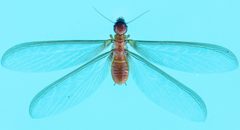
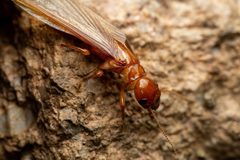
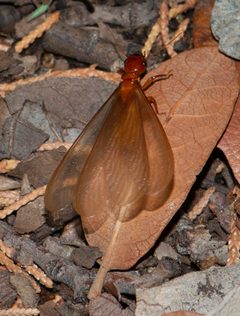
Zootermopsis is a of dampwood termites in the Archotermopsidae, containing four extant and one extinct native to western North America. These inhabit decaying wood in temperate rain forests, where they digest cellulose with the aid of symbiotic gut protists and bacteria. The genus exhibits complex social organization with distinct including reproductives, soldiers, and pseudergates. Species identification relies on subsidiary tooth in non-soldier castes, a more reliable method than soldier-based characteristics.
Pronunciation
How to pronounce Zootermopsis: /ˌzoʊtəˈmɑpsɪs/
These audio files are automatically generated. While they are not always 100% accurate, they are a good starting point.
Identification
-level identification uses the shape and position of the subsidiary tooth in non-soldier (nymphs, pseudergates, reproductives). This method provides greater certainty than previous approaches based on soldier , which were more ambiguous. The four extant species (Z. angusticollis, Z. laticeps, Z. nevadensis with Z. n. nevadensis and Z. n. nuttingi) and one extinct species (Z. coloradensis) can be distinguished by these dental characteristics combined with cuticular hydrocarbon phenotypes and geographic distribution.
Images
Habitat
Inhabits rotting wood, specifically fallen or dead trees in temperate rain forests. Requires moist, decaying wood substrates for colony establishment and maintenance. Coastal forest of Z. nevadensis nuttingi occur in western United States coastal forests.
Distribution
Native to western North America, ranging from Canada through the United States to Mexico. Zootermopsis nevadensis has been introduced and established in Japan, the only with a non-native range.
Diet
Wood; specifically cellulose and lignocellulose from decaying wood. Digestion depends on symbiotic protists (Streblomastix, Trichomitopsis, Trichonympha) and bacteria in the .
Life Cycle
Developmentally flexible system with primary and supplementary reproductives, soldiers, pseudergates, and nymphs. size varies by caste: reproductives and presoldiers possess larger corpora allata than juveniles of equivalent instar, while soldiers maintain corpora allata similar in size to corresponding stages. glands are H-shaped with prothoracic and cephalic portions, degenerating shortly after the imaginal molt.
Behavior
Exhibits nestmate recognition based on cuticular hydrocarbon phenotypes. Agonistic is phenotype-specific: soldiers and pseudergates rarely attack individuals sharing their hydrocarbon phenotype. Zootermopsis angusticollis is typically aggressive toward Z. nevadensis phenotype III but shows variable responses to phenotype I depending on combinations tested. Zootermopsis laticeps displays agonistic responses toward all other phenotypes. Olfactory-based behaviors mediate social interactions and environmental navigation.
Ecological Role
Primary decomposer in temperate rain forest , breaking down wood and recycling lignocellulose. Contributes to nutrient cycling through wood decomposition and soil formation processes.
Human Relevance
Occasionally encountered in wooden structures with moisture problems, though less destructive than drywood or subterranean pests. Sold for educational and research purposes in artificial . Serves as model organism for studies of social insect , differentiation, and epigenetics.
Similar Taxa
- ArchotermopsisRelated in same Archotermopsidae; distinguished by geographic distribution and morphological characteristics
- HodotermopsisRelated dampwood ; Zootermopsis distinguished by North American distribution and specific subsidiary tooth
- TermopsisRelated dampwood in same ; Zootermopsis separated by diagnostic dental and hydrocarbon characteristics
More Details
Epigenetics
Zootermopsis nevadensis exhibits among the highest levels of methylation recorded in insects. Methylation patterns differ strongly between , with methylated genes showing uniformly high expression. Differentially methylated genes are enriched for development-associated functions and show increased alternative splicing.
Gut Symbionts
Five protist inhabit the , with Streblomastix most abundant in the hindgut, Trichomitopsis concentrated in the hindgut, and Trichonympha least abundant with variable distribution across segments.
Sources and further reading
- BugGuide
- Wikipedia
- GBIF taxonomy match
- iNaturalist taxon
- NCBI Taxonomy
- Catalogue of Life
- Mite on White | Beetles In The Bush
- Bug Eric: Flying Ants
- The 2nd-oldest Known Myrmicine Ant | Beetles In The Bush
- Behavioural aspects of olfaction in the damp-wood termite Zootermopsis angusticollis (Hagen)
- Distribution and relative abundance of three protist genera within the Zootermopsis nevadensis nuttingi hindgut
- Agonistic behavior correlated with hydrocarbon phenotypes in dampwood termites,Zootermopsis (Isoptera: Termopsidae)
- Nesting ecology and cuticular microbial loads in dampwood (Zootermopsis angusticollis) and drywood termites (Incisitermes minor, I. schwarzi, Cryptotermes cavifrons)
- The caste- and sex-specific DNA methylome of the termite Zootermopsis nevadensis
- Morphology and histology of the endocrine glands of Zootermopsis angusticollis Hagen (Isoptera)