
Kalotermes approximatus
Snyder, 1920
Dark Southern Drywood Termite
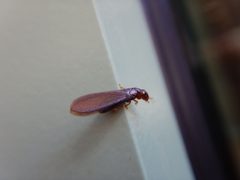
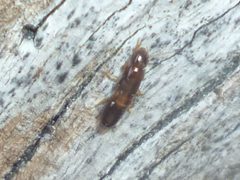
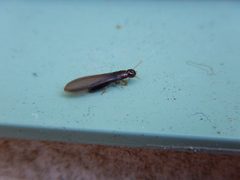
Kalotermes approximatus is a in the Kalotermitidae, commonly known as the dark southern drywood termite. The is classified as an uncommon structural pest that infests wooden structures and trees without requiring soil contact. It is distributed across the southeastern United States from Virginia to Florida and west to Texas, and plays a role as a decomposer of dead wood and woody debris in natural .
Pronunciation
How to pronounce Kalotermes approximatus: /kæloʊˈtɜːrmiːz əˌprɒksɪˈmeɪtəs/
These audio files are automatically generated. While they are not always 100% accurate, they are a good starting point.
Identification
As a , K. approximatus can be distinguished from subterranean termites by its lack of soil contact requirements. Specific diagnostic morphological features for this are not detailed in available sources.
Images
Habitat
Dead portions of living trees and woody debris in the southeastern coastal plain; also found in wooden structures and roseaceous trees. The occupies dry wood environments and does not require contact with soil.
Distribution
Southeastern United States, ranging from southeastern Virginia south to southern Florida and west to southern Texas. Documented as common throughout the southeastern coastal plain of North Carolina, with records from Florida, Georgia, South Carolina, North Carolina, and Virginia.
Diet
Wood (cellulose); specifically dead wood and woody debris rather than sound wood of commercial value. The is .
Behavior
Non-subterranean; does not require contact with soil. Unlike subterranean termites, this can infest dry wood directly without maintaining soil connections.
Ecological Role
Decomposer of dead wood and woody debris in forest . Contributes to nutrient cycling by breaking down woody material.
Human Relevance
Uncommon structural pest that infests wooden structures. Some have been recorded, though the is less economically significant than subterranean species.
Sources and further reading
- BugGuide
- GBIF taxonomy match
- iNaturalist taxon
- NCBI Taxonomy
- Catalogue of Life
- Coleoptera | Beetles In The Bush | Page 6
- Kalotermes approximatus Habitat in South Carolina
- Distribution of Kalotermes approximatus (Isoptera: Kalotermitidae) in North Carolina
- Dark Southern Drywood Termite (suggested common name) Kalotermes approximatus Snyder (Insecta: Blattodea: Kalotermitidae)