
Shelfordella
Adelung, 1910
Turkestan cockroach, red runner cockroach, rusty red cockroach
Species Guides
1- Shelfordella lateralis(Turkestan cockroach)
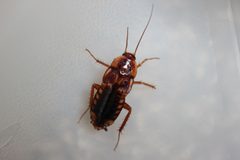
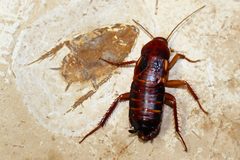
Shelfordella is a of in the Blattidae, with Shelfordella lateralis being the most widely documented . The genus is native to regions from northern Africa through Central Asia. S. lateralis has become an established in North America since 1978, particularly in California and Texas, where it has displaced the oriental cockroach in many areas. The species is primarily outdoor-dwelling but occasionally enters structures through sewers and drains.
Pronunciation
How to pronounce Shelfordella: /ʃɛlfɔːrdɛlːa/
These audio files are automatically generated. While they are not always 100% accurate, they are a good starting point.
Images
Habitat
Shelfordella lateralis inhabits outdoor environments including water meter boxes, cracks in concrete pavement, compost piles, leaf litter, potted plants, wood and debris piles, rock wall crevices, and outdoor drainage pipes. The is also found in public storm drains and sanitary sewers, which provide dark, moist microhabitats. While primarily outdoor, individuals occasionally enter buildings through sewer systems and drainpipes, but do not establish indoor .
Distribution
Native range extends from northern Africa through Central Asia, including Afghanistan, Egypt, Gulf States, India, and Iran. Introduced to North America in 1978 at Sharpe Army Depot in Lathrop, California, with subsequent establishments at Fort Bliss, Texas and other military bases. Currently established throughout California, particularly in the Central Valley, southern California, and warm, dry regions. Also documented in Quetta, Pakistan as a pest.
Behavior
foraging activity. Shelfordella lateralis is primarily an outdoor that does not reproduce indoors. The species is known to travel through sewer systems and drainpipes. In California, individuals have been observed on sidewalks at night in urban areas. Females reach maturity faster and produce more during their lifetimes than oriental cockroach females.
Human Relevance
Shelfordella lateralis serves as food for insect-eating pets and reptiles, and is commonly sold online for this purpose. The is a public health concern due to its potential to carry pathogenic bacteria; strains isolated from S. lateralis in Pakistan showed resistance, including Helicobacter spp to eight tested antibiotics. The species is displacing the oriental cockroach (Blatta orientalis) in parts of California, representing a shift in urban pest . Not considered a significant indoor pest as it does not establish indoor , though occasional indoor encounters occur.
Similar Taxa
- Blatta orientalisFemales of Shelfordella lateralis are often confused with oriental cockroach females, but can be distinguished by cream-colored markings along the edges behind the and around the short, rounded wings.
- Periplaneta americanaMales of Shelfordella lateralis may appear similar to American cockroach males, but are smaller with yellowish-beige wings bearing cream-colored stripes along the edges.
Sources and further reading
- BugGuide
- GBIF taxonomy match
- Catalogue of Life
- A New Cockroach in Town? | Bug Squad
- It's Friday Fly Day! | Bug Squad
- The Bacterial Community in the Gut of the Cockroach Shelfordella lateralis Reflects the Close Evolutionary Relatedness of Cockroaches and Termites
- Spatial distribution of synanthropic cockroaches found in Quetta, Pakistan and antibiotic‐resistant bacteria strains found in Shelfordella lateralis (Walker, 1868) (Blattodea: Blattidae)
- Direct and delayed effect of the plant Cleome amblyocarpa Barratte & Murb (Capparidaceae) on the two species of (Blattodea) Blattella germanica (Linnaeus, 1767) and Shelfordella lateralis (Walker, 1868)