
Blattidae
Latreille, 1810
Household Cockroaches
Subfamily Guides
2is a of in the order Blattodea, established by Latreille in 1810. The family includes several of the most common household and peri-domestic pest , notably in the *Periplaneta*, *Blatta*, and *Eurycotis*. The family is distributed worldwide, with particular diversity in tropical and subtropical regions. Many species have adapted to human-altered environments, though numerous species remain restricted to natural such as leaf litter and forest floors.
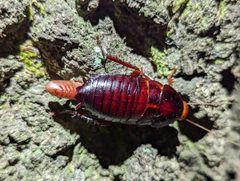
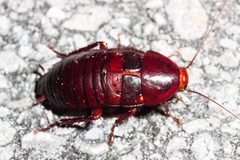
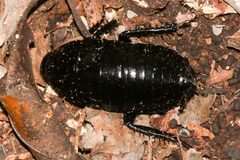
Pronunciation
How to pronounce Blattidae: /ˈblæ.tɪˌdiː/
These audio files are automatically generated. While they are not always 100% accurate, they are a good starting point.
Identification
is distinguished from other primarily by genitalic characters, particularly the structure of male genitalia. -level identification often requires examination of the sub-genital plate, modified styli, and phallomere structures. The family is generally characterized by relatively large body size compared to many Ectobiidae, with species ranging from approximately 20 mm to over 50 mm in length. Wing development varies: some species are fully winged, others have reduced wings, and some are wingless.
Images
Habitat
range from tropical rainforests to arid urban environments. Many occupy leaf litter, decaying wood, and ground-level substrates. Several species have become established in human dwellings, particularly in warm climates. The shows broad ecological , with species found in caves, forests, grasslands, and agricultural areas.
Distribution
Worldwide distribution, with highest diversity in tropical and subtropical regions of Asia, Australasia, Africa, and the Americas. Established occur on every continent except Antarctica. Specific regional distributions vary by : Archiblattinae in Southeast Asia, Macrocercinae in Australasia, and Polyzosteriinae in Central and South America, Pacific islands, and Australasia.
Diet
scavengers; diet includes decaying organic matter, plant material, and opportunistically available food sources. Specific dietary preferences vary among and life stages.
Life Cycle
Hemimetabolous development with , nymph, and stages. Females produce containing multiple eggs. Nymphal development involves multiple ; the number varies by (e.g., *Blatta lateralis* completes development in 5 molts, while *Blatta orientalis* requires 7–10 molts). Developmental rate is temperature-dependent.
Behavior
is a key characteristic, with group formation serving ecological functions including avoidance and microclimate regulation. Individual variation in thigmotaxis (wall-seeking behavior) has been documented in *Periplaneta americana*, with "explorer" and "wallflower" personality types affecting collective fleeing responses. Some exhibit positive or negative phototaxis depending on context. Males of some species offer nutritional gifts () to females during courtship.
Ecological Role
Decomposers that contribute to nutrient cycling in forest floor and soil . Serve as prey for various vertebrate and . Some function as intermediate for including (*Steinernema rarum*).
Human Relevance
Several are significant urban pests, including *Periplaneta americana* (American cockroach), *Blatta orientalis* (Oriental cockroach), and *Blatta lateralis* (Turkestan cockroach). These species are allergen sources, potential mechanical of , and indicators of issues. The Turkestan cockroach has become an in the southwestern United States, displacing the Oriental cockroach through shorter developmental periods and higher . Some species are cultured as feeder insects for reptiles and other animals. endosymbionts have been detected in some species, with potential implications for future pest management strategies.
Similar Taxa
- EctobiidaeFormerly included within as Ectobiinae; distinguished by generally smaller body size and different genitalic structure
- BlaberidaeLarger, often wingless with different oothecal structure; some former (e.g., *Byrsotria*) now placed in Blaberidae
More Details
Subfamilies
Four are currently recognized: Archiblattinae (Southeast Asia), Blattinae (worldwide), Macrocercinae (Australasia), and Polyzosteriinae (Central and South America, Pacific islands, Australasia).
Wolbachia Infection
Approximately 25% of screened harbor endosymbionts, including *Eurycotis floridana*, *Blatta lateralis*, *Periplaneta fuliginosa*, and *Periplaneta americana*. The F-clade Wolbachia detected in these species may provide nutritional benefits (biotin synthesis), suggesting potential for -based control strategies.
Sources and further reading
- BugGuide
- Wikipedia
- GBIF taxonomy match
- iNaturalist taxon
- NCBI Taxonomy
- Catalogue of Life
- Explorer or Wallflower? Study Shines Light on Cockroach Personalities
- Wolbachia in Cockroaches: A New Paradigm for Urban Pest Management?
- Vengeful Taxonomy: Your Chance to Name a New Species of Cockroach
- The Invasive Turkestan Cockroach is Displacing the Oriental Cockroach in the Southwestern U.S.
- Function of Cockroach (Orthoptera: Blattidae) Aggregation Behavior
- The Mating Behavior of Byrsotria Fumigata (Guérin) (Blattidae, Blaberinae) 1)
- Australian Cockroach Periplaneta australasiae Fabricius (Insecta: Blattodea: Blattidae)
- Susceptibility of Periplaneta americana (Blattodea: Blattidae) to two isolates of Steinernema rarum (Rhabditida: Steinernematidae) of the province of Córdoba, Argentina