
Periplaneta japonica
Karny, 1908
Japanese cockroach, Yamato cockroach
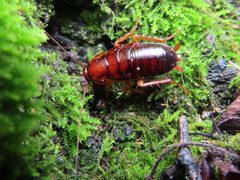
Periplaneta japonica is a cold-tolerant native to Japan, adapted to cooler northern climates. It possesses a flexible with facultative nymphal , allowing nymphs to overwinter once or twice before reaching maturity. The produces a unique viscous proteinaceous secretion in nymphs that enables active defense against . First documented in the United States in 2012 in New York City, it has been observed to survive outdoors in freezing temperatures, distinguishing it from most urban cockroach pests.
Pronunciation
How to pronounce Periplaneta japonica: //ˌpɛrɪpləˈniːtə dʒəˈpɒnɪkə//
These audio files are automatically generated. While they are not always 100% accurate, they are a good starting point.
Identification
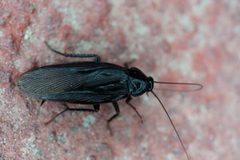
Distinguished from other Periplaneta by its cold and ability to survive outdoors in freezing temperatures. Nymphs possess stout hairs on the 6th and 7th tergites and surface of associated with secretory function. lack the viscous defensive secretion present in nymphs. In New York, it was initially identified through after visual detection by an exterminator who noted specimens looked different from common urban species.
Images
Habitat
Native to Japan where it occupies cooler northern climates. In North America, first detected on the High Line in Manhattan, an elevated urban park. Capable of surviving outdoors in freezing temperatures and snow, unlike most Periplaneta . Also inhabits indoor environments alongside other urban species.
Distribution
Native to Japan. Documented in China and Korea. Introduced to the United States with confirmed presence in New York City (Manhattan) since 2012. Suspected arrival via ornamental plants in soil; no confirmed New Jersey sightings as of initial documentation.
Life Cycle
Flexible or semivoltine (one- or two-year) lifecycle depending on hatching timing. Characterized by facultative nymphal allowing nymphs to spend one or two winters in diapause before reaching maturity. Secretion production in nymphs triggered by isolation or low rearing conditions.
Behavior
prefer shelter heights of 1cm over 2cm or 0.5cm; nymphs prefer 0.5cm over 1cm. Adults and older nymphs (3rd-5th instar) tend to occupy separate shelters when paired, suggesting avoidance rather than . First instar nymphs tend to coexist in pairs in shelters. Harbouring similar to P. americana and P. fuliginosa. Nymphs exhibit active defensive behavior against aggressive ants (Formica exsecta fukaii) by splashing viscous secretion droplets that instantly immobilize attackers.
Human Relevance
Identified as an pest in New York City with potential to survive outdoors during winter, unlike established urban . May compete with existing Periplaneta species for space and food indoors; researchers suggest combined indoor could potentially decrease due to increased competition. Unlikely to hybridize with other Periplaneta species due to incompatible genitalia.
Similar Taxa
- Periplaneta americanaSimilar harbouring and -level , but P. japonica is distinguished by cold and outdoor winter survival.
- Periplaneta fuliginosaSimilar harbouring ; both produce viscous secretions in nymphs for defense, though P. fuliginosa secretion contains sulfur compounds while P. japonica secretion lacks sulfur.
Sources and further reading
- BugGuide
- GBIF taxonomy match
- iNaturalist taxon
- NCBI Taxonomy
- A New Cockroach in Town? | Bug Squad
- 'R' Is for Roaches at UC Davis Picnic Day | Bug Squad
- Who Introduced the Roach Races to UC Davis? | Bug Squad
- Cold-tolerant Cockroach from Asia has been Found in New York
- Unwelcome guests in Hawai’i: American cockroach, Periplaneta americana, German cockroach, Blattella germanica, and Western yellowjacket, Vespula pensylvanica — Bug of the Week
- Explorer or Wallflower? Study Shines Light on Cockroach Personalities
- Flexible Life Cycle of a Cockroach Periplaneta japonica with Nymphal Diapause
- Harbouring behaviour of three species of cockroaches, Periplaneta americana, P. japonica, and Blattella germanica
- Defensive Behavior of the Cockroaches, Periplaneta fuliginosa SERVILLE and P. japonica KARNY (Orthoptera : Blattidae) in Relation to Their Viscous Secretion
- Observations on the life history of the Japanese cockroach, Periplaneta japonica (Karny) under outdoor conditions
- Influence of temperature on the harbouring behaviour of four species of cockroaches, Periplaneta fuliginosa, P. americana, P. japonica, and Blattella germanica