
Tomocerus
Nicolet, 1841
elongate springtails
Species Guides
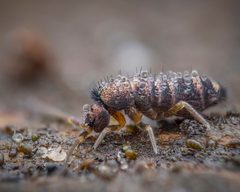
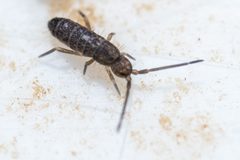
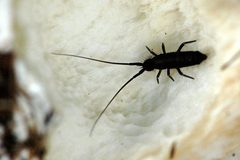
2Tomocerus is a of elongate springtails (Collembola) in the Tomoceridae, characterized by their relatively large size among springtails and distinctive body proportions. in this genus are distributed across multiple continents including Europe, Asia, and the Americas, with some species exhibiting troglomorphic adaptations in cave . The genus has been subject to taxonomic revision, with such as the kinoshitai and ocreatus groups recognized. Tomocerus vulgaris is a notable species that has been studied for its and ecological interactions, including serving as prey for specialized such as harvestmen.
Pronunciation
How to pronounce Tomocerus: /tɒˈmɒsɛrəs/
These audio files are automatically generated. While they are not always 100% accurate, they are a good starting point.
Identification
Members of Tomocerus can be distinguished from other by their elongated body form, relatively long , and characteristic dental spine on the . -level identification requires examination of chaetotaxy patterns, particularly the cephalic chaetotaxy formula, number and arrangement of macrochaetae on thoracic segments, ungual tooth count and structure, dental spine formulas, and mucronal tooth configuration. Cave-dwelling species may exhibit troglomorphic traits including reduced or absent , depigmentation, and elongated appendages.
Images
Habitat
occupy diverse terrestrial including leaf litter, soil, decaying wood, and cave systems. Surface-dwelling species are found in forest floor environments, while some species are specialized for subterranean habitats. Chinese species have been recorded from both cave and surface habitats, with some showing intermediate stages of troglomorphic .
Distribution
Widely distributed across the Holarctic and other regions. Records indicate presence in Europe, China (including Anhui, Jiangsu, Guizhou, and Guangxi Provinces), and the Americas. GBIF distribution records include Antarctic and Subantarctic regions, Arctic and Sub-arctic, Ascension and St. Helena, Caribbean mainland, and Continental Southeast Asia.
Similar Taxa
- EntomobryaBoth are elongate springtails in Entomobryomorpha, but Tomocerus belongs to Tomoceridae while Entomobrya is in Entomobryidae; Tomocerus typically has more robust body proportions and distinctive dental spine
- SinellaSimilar body form in Entomobryomorpha, but Sinella (Entomobryidae) differs in chaetotaxy patterns and lacks the characteristic tomocerid dental spine structure
- PseudosinellaBoth elongate entomobryomorph springtails, but Pseudosinella (Entomobryidae) is generally smaller with different antennal and furcular
Sources and further reading
- BugGuide
- Wikipedia
- GBIF taxonomy match
- iNaturalist taxon
- NCBI Taxonomy
- Catalogue of Life
- Harvestmen Use Glue to Capture Prey
- Brazil Bugs #12 – Desafio de identificação #5 | Beetles In The Bush
- Bionomics of Tomocerus vulgaris Tullberg (Collembola: Entomobryidae)
- Re-Examination of Three Species of Tomocerus s.l. (Collembola: Tomoceridae) from China
- Foods ingested by Tomocerus spp. [Collembola, Entorno-bryidae], in relation to habitat
- Two new Chinese species of Tomocerus at different stages of troglomorphic adaptation (Collembola, Tomoceridae)
- Revision of Tomocerus similis Chen & Ma, with discussion of the kinoshitai complex and the distal tibiotarsal chaetae in Tomocerinae (Collembola, Tomoceridae)