
Tomocerus vulgaris
(Tullberg, 1871)
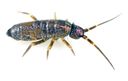
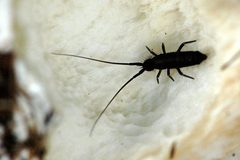
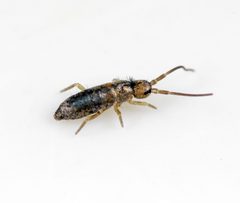
Tomocerus vulgaris is a European in the Tomoceridae, characterized by an elongate body form and relatively long . It is a soil-dwelling organism that has been documented as prey for harvestmen, which use adhesive secretions to capture this species despite its water-repellent . The species has been subject to bionomic studies examining its and temperature-dependent development.
Pronunciation
How to pronounce Tomocerus vulgaris: //toʊˈmɒsərəs vʌlˈɡɛərɪs//
These audio files are automatically generated. While they are not always 100% accurate, they are a good starting point.
Identification
Members of Tomocerus can be distinguished from other entomobryomorph springtails by their robust, elongate body and notably long that may exceed body length. T. vulgaris specifically requires examination of chaetotaxy and body pigmentation patterns for definitive identification; molecular or detailed morphological analysis may be necessary to separate it from such as T. minor.
Images
Habitat
Soil and leaf litter ; specifically documented from beneath bark of dead trees in association with other soil-dwelling arthropods.
Distribution
Europe, with confirmed records from Belgium, Denmark, and other European countries.
Ecological Role
Documented prey for the harvestman Mitostoma chrysomelas; serves as a representative test case for studies of prey capture by viscoelastic adhesive secretions. Its water-repellent microstructures, which normally repel liquids, are overcome by harvestman secretions that completely wet the cuticle surface.
Similar Taxa
- Tomocerus minorSimilar elongate body form and preferences; requires detailed examination of morphological characters for separation.
- Entomobrya spp.Also elongate-bodied entomobryomorph springtails, but generally with shorter relative to body length and different body proportions.