
Tomocerus minor
(Lubbock, 1862)
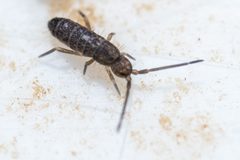
Tomocerus minor is a cosmopolitan springtail in the Tomoceridae. It reaches up to 4.5 mm in body length and exhibits a characteristic uniform bluish iridescence. The species has been recorded across a remarkably broad geographic range, spanning from Arctic regions to temperate and tropical zones across multiple continents and oceanic islands.
Pronunciation
How to pronounce Tomocerus minor: /toʊˈmɑːsərəs ˈmaɪnɔr/
These audio files are automatically generated. While they are not always 100% accurate, they are a good starting point.
Identification
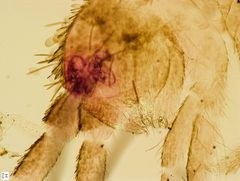
The combination of bluish iridescent coloration and shorter than the body distinguishes Tomocerus minor from many . Body size up to 4.5 mm provides a useful reference point. Accurate identification to level in Tomocerus typically requires examination of chaetotaxy and other microscopic characters not described in available sources.
Images
Appearance
Body length up to 4.5 mm. shorter than the body. displays a uniform bluish iridescence. General body plan typical of the Tomocerus with elongated form.
Distribution
Arctic regions, Europe, Western and Central Asia, Sino-Japanese region, Northern and Pacific North America, Hawaii, Caribbean mainland, New Zealand, and the Azores (Faial, Flores, Pico, São Jorge, São Miguel).
More Details
Taxonomic note
The was originally described as Macrotoma minor by Lubbock in 1862. Some sources list an alternative authorship (Islam, S, Alim, A & Hossain, M, 2014) with status as ambiguous synonym, though GBIF and NCBI recognize Lubbock (1862) as the accepted authority.
Research context
Tomocerus minor has been documented as prey for the harvestman Mitostoma chrysomelas, which uses viscoelastic secretions on its to capture springtails.
Sources and further reading
- BugGuide
- Wikipedia
- GBIF taxonomy match
- iNaturalist taxon
- NCBI Taxonomy
- Catalogue of Life
- Six new Dracula ants from Madagascar: Minor workers become queens in Mystrium | Blog
- Litaneutria minor – agile ground mantid | Beetles In The Bush
- Bug Eric: Priocnemis minorata
- New ant species explodes to defend its colony | Blog
- Harvestmen Use Glue to Capture Prey