
Pentidotea montereyensis
Maloney, 1933
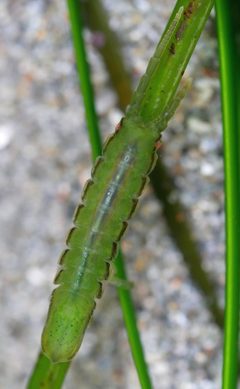
Pentidotea montereyensis is a marine isopod in the Idoteidae, first described by Maloney in 1933. The is found in the temperate northern Pacific Ocean and is associated with kelp and algal . Like other idoteid isopods, it is dorsoventrally flattened and adapted for clinging to macroalgae. The species has been documented through 254 iNaturalist observations, indicating moderate contemporary recording effort.
Pronunciation
How to pronounce Pentidotea montereyensis: //ˌpɛn.tɪˈdoʊ.ti.ə ˌmɒn.təˌreɪˈɛn.sɪs//
These audio files are automatically generated. While they are not always 100% accurate, they are a good starting point.
Identification
Distinguished from other Pentidotea by geographic restriction to the Monterey region and temperate northern Pacific, though detailed morphological differentiators from (such as P. wosnesenskii or P. resecata) are not clearly documented in available sources. Examination of pleopod structure and uropod by a is likely required for definitive identification.
Images
Habitat
Marine coastal environments, specifically associated with kelp forests and macroalgal beds. Found on brown including kelps (Laminariales) and other large seaweeds where it clings to fronds.
Distribution
Temperate northern Pacific Ocean; specifically documented from the Monterey region of California, USA, with distribution extending through appropriate in the northeastern Pacific.
Diet
Herbivorous, feeding on macroalgae. Has been observed grazing on kelp and other brown .
Host Associations
- Macrocystis pyrifera - Giant kelp; primary substrate
- Nereocystis luetkeana - Bull kelp; documented
Behavior
Clings to algal fronds using flattened body and modified appendages; remains motionless when disturbed as camouflage strategy.
Ecological Role
Herbivore in kelp forest ; contributes to algal processing and serves as prey for fish and .
Human Relevance
No direct economic importance; occasionally encountered by tidepool visitors and divers. Serves as for kelp forest health.
Similar Taxa
- Pentidotea wosnesenskiiOverlaps in range and ; distinguished by subtle morphological differences in pleopod structure and antennal segments
- Pentidotea resecataSimilar flattened body form and algal association; P. montereyensis restricted to Monterey region while P. resecata has broader northeastern Pacific distribution
- Idotea spp.Related in same ; Idotea generally more robust with different uropod and often found in Atlantic or European waters
More Details
Taxonomic history
Described by Maloney in 1933 from specimens collected in the Monterey Bay area. The Pentidotea was separated from Idotea based on subtle morphological distinctions including pleopod structure.
Observation frequency
254 iNaturalist observations as of data retrieval, suggesting the is moderately detectable by citizen scientists in appropriate and season.