
Pentidotea
Richardson, 1905
Species Guides
4- Pentidotea aculeata(Pencil Isopod)
- Pentidotea montereyensis
- Pentidotea resecata(Eelgrass Isopod)
- Pentidotea wosnesenskii(Rockweed isopod)
Pentidotea is a of marine isopods in the Idoteidae, established by Richardson in 1905. The genus comprises approximately 13 described of flattened, oval-shaped crustaceans found in coastal marine environments. These isopods are members of the suborder Valvifera, characterized by their ability to roll into a ball. Species in this genus are primarily associated with and seagrass in temperate to cold waters.
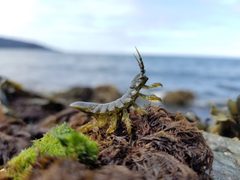
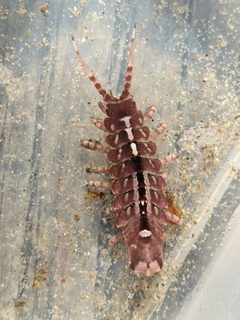
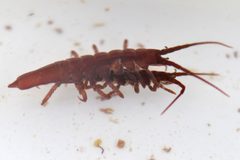
Pronunciation
How to pronounce Pentidotea: //pɛn.tɪˈdoʊ.ti.ə//
These audio files are automatically generated. While they are not always 100% accurate, they are a good starting point.
Identification
Distinguished from other idoteid by the combination of a strongly flattened oval body and well-developed valviferal pleon that enables conglobation. The smooth and short separate it from rougher or more elongate isopod genera. -level identification requires examination of pleopod structure, uropod , and subtle differences in body proportions; these determinations typically require examination.
Images
Habitat
Marine coastal environments, primarily associated with macroalgae and seagrass beds. Found in the intertidal and shallow subtidal zones. occupy the spaces between algal fronds and blades, using the flattened body form to remain hidden. specificity varies by species, with some showing strong associations with particular algal .
Distribution
Temperate and cold-water coastlines of the Northern Hemisphere, particularly the North Pacific and North Atlantic. Distribution extends across Arctic and regions. Specific range limits vary by within the .
Diet
Herbivorous, feeding on macroalgae. Has been observed grazing on algal tissues and likely consumes epiphytic microalgae and detritus associated with plants.
Host Associations
- Macroalgae - and food source-specific associations with brown, red, and green ; some species show preference for particular algal
- Seagrasses - Some occupy seagrass beds in addition to or instead of macroalgal
Life Cycle
Development is direct, with young resembling miniature . of and early juveniles occurs in a marsupium ( pouch) formed by overlapping oostegites on the female's surface. Specific details of reproductive timing, , and development vary among and are not well documented for the as a whole.
Behavior
Slow-moving, clinging to algal substrates using thoracic legs. When disturbed, individuals curl into a tight ball (conglobation), protecting the vulnerable surface. This defensive is characteristic of the suborder Valvifera. Activity patterns likely follow tidal cycles, with movement associated with feeding and mate location.
Ecological Role
Herbivore and in coastal algal . Grazing activity may influence algal productivity and epiphyte loads. Serves as prey for fish, birds, and larger . Contributes to nutrient cycling within macrophyte-dominated .
Human Relevance
No direct economic importance. Occasionally encountered by beachgoers and tidepool visitors. Serves as indicator of healthy algal in coastal . Some may be incidentally collected in seaweed harvests.
Similar Taxa
- IdoteaAlso in Idoteidae; distinguished by body shape and degree of flattening, with Pentidotea being more strongly oval and capable of tighter conglobation
- SynidoteaRelated valviferan ; differs in body proportions, pleopod structure, and geographic distribution
- Other marine isopod families (e.g., Sphaeromatidae)Some sphaeromatids also conglobate but differ in body shape, uropod structure, and preferences; Pentidotea is distinguished by idoteid characteristics including antennal structure and mouthpart
More Details
Taxonomic history
The was established by Harriet Richardson in 1905 to accommodate previously placed in Idotea that showed distinct morphological features, particularly the strongly oval body and valviferal pleon structure.
Research needs
-level is poorly known for most members of the . Detailed studies of specificity, reproductive biology, and are lacking for the majority of the 13 described species.