
Philosciidae
Philosciid Woodlice
Genus Guides
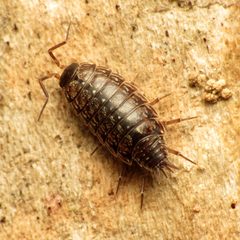
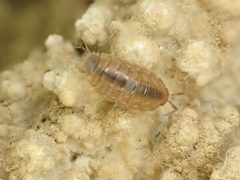
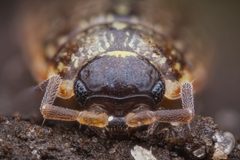
5Philosciidae is a of terrestrial isopod crustaceans commonly known as woodlice. The family exhibits a distribution with strong representation in tropical and subtropical regions, particularly in the Americas, Africa, and Oceania. is highest in the Neotropics, with numerous and described from Brazil alone. Several species have adapted to cave environments (troglobitic), including notable examples in the genera Benthana and Benthanoides from iron-ore caves in the Amazon biome. The family is less diverse in the , where only a few species occur.
Pronunciation
How to pronounce Philosciidae: //fɪloʊˈsaɪɪdiː//
These audio files are automatically generated. While they are not always 100% accurate, they are a good starting point.
Identification
Philosciidae can be distinguished from other oniscidean by a combination of morphological characters including body shape, pleon structure, and uropod . Specific identification requires examination of detailed anatomical features such as the male genitalia (particularly the endopodite of the first pleopod), antennal structure, and body ornamentation. The family contains numerous that vary considerably in size and body form, from small compact to more elongate forms. Cave-adapted species (troglobites) typically show reduced pigmentation and development compared to surface-dwelling relatives.
Images
Habitat
Philosciidae occupy diverse terrestrial across tropical and subtropical regions. Surface-dwelling occur in leaf litter, soil, decaying wood, and other moist microhabitats. Multiple species have independently colonized subterranean environments, with documented troglobitic species in iron-ore caves of the Serra dos Carajás complex (Amazon biome), limestone caves in the Açungui group, and various karst regions including the Quadrilátero Ferrífero. Cave-restricted species are typically associated with areas of intense mining activity, creating conservation concerns.
Distribution
distribution with centers of diversity in (sub)tropical America, Africa, and Oceania. In the Neotropics, documented from Brazilian states including Bahia, Minas Gerais, Pará, Sergipe, and São Paulo, with particular diversity in the Atlantic Forest and Amazon biomes. The Benthana, typically associated with the Atlantic Forest, has been recorded from the Amazon biome (Serra dos Carajás), suggesting possible relict distributions. Limited representation in the with records from Denmark, Norway, Sweden, and the northeastern United States (Vermont).
Behavior
Cave-restricted exhibit troglobitic adaptations including reduced pigmentation and regression. Surface-dwelling species are likely or , seeking moist refugia during dry periods. No specific behavioral details documented for the as a whole.
Human Relevance
Several troglobitic occur in areas of intense iron-ore mining activity, creating conservation concerns and potential conflicts with extractive industries. The serves as a subject for biogeographic and evolutionary studies, particularly regarding cave and relict distributions.
Similar Taxa
- ScleropactidaeBoth occur in similar including caves; distinguished by morphological differences in pleopod structure and body form. Some previously assigned to Philosciidae have been transferred to Scleropactidae.
- HalophilosciidaeFormerly considered part of Philosciidae; separated based on distinct morphological characters and preferences. Halophilosciidae are typically associated with coastal and halophilic environments.
- LigiidaeBoth are of terrestrial isopods; Ligiidae (sea slaters) are generally larger, more elongate, and restricted to coastal supralittoral zones, whereas Philosciidae are more diverse in body form and occupy broader terrestrial inland.
More Details
Taxonomic Complexity
The contains over 100 described with numerous , many poorly known. Recent taxonomic work has described new species from Brazilian caves and revised the genus Benthana. The family Halophilosciidae was separated from Philosciidae based on distinct morphological characters.
Conservation Significance
Troglobitic in the Benthana and Benthanoides from the Serra dos Carajás represent significant biogeographic findings and are subject to conservation concern due to their restriction to caves in mining areas. Benthana alba from plateau N5 is known from only a single cave, making it particularly vulnerable.
Sources and further reading
- BugGuide
- Wikipedia
- GBIF taxonomy match
- iNaturalist taxon
- NCBI Taxonomy
- Isopoda | Beetles In The Bush
- Bibliography | Beetles In The Bush
- Taxonomic revision of the genus Benthana Budde-Lund, 1908 (Isopoda: Oniscidea: Philosciidae)
- New troglobitic species of Benthana Budde-Lund, 1908 and Benthanoides Lemos de Castro, 1958 from iron-ore caves and their important record in the Amazon biome (Crustacea: Isopoda: Philosciidae)
- New species and new records of terrestrial isopods (Crustacea, Isopoda, Oniscidea) of the families Philosciidae and Scleropactidae from Brazilian caves