
Cubaris murina
Brandt, 1833
little sea isopod, little sea roly poly, little sea pillbug, little sea pill woodlouse
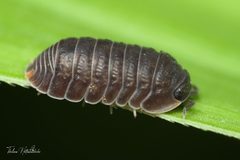
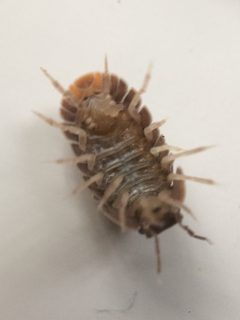
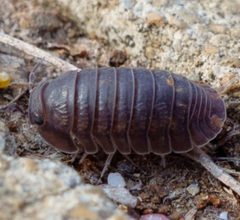
Cubaris murina is a small terrestrial isopod () in the Armadillidae, notable for its ability to conglobate—roll into a complete ball when disturbed. The reaches approximately 11 mm in length and 5 mm in width. It has a remarkably broad geographic distribution spanning tropical and subtropical regions across multiple continents, with in the Caribbean, South America, Southeast Asia, and the Pacific. The species has become popular in the pet trade due to its bioactive utility in terrariums and the development of several color morphs through selective breeding.
Pronunciation
How to pronounce Cubaris murina: //ˈkjuː.bə.rɪs mjuːˈraɪ.nə//
These audio files are automatically generated. While they are not always 100% accurate, they are a good starting point.
Identification
Distinguished from other terrestrial isopods by its small size, complete conglobation ability, and geographic origin. Differs from Armadillidium vulgare (common pillbug) by smaller maximum size and more rounded conglobation posture. Separated from larger Cubaris such as Cubaris sp. 'Rubber Ducky' by diminutive stature. Color morphs in captivity are identified by specific pattern and pigmentation: Glacier morph uniquely shows depigmentation of and appendages, suggesting possible leucistic or albino condition.
Images
Appearance
Small terrestrial isopod reaching up to 11 mm in length and 5 mm in width. Body capable of complete conglobation (rolling into a ball). Natural coloration typically dull, but hobbyist exhibit several distinct color morphs: Papaya (dull pink, possibly albinistic), Glacier (almost completely white with white , legs, and ), Anemone (calico pattern of orange and grey), and Florida Orange (bright orange, isolated from wild Florida population).
Habitat
Terrestrial; occurs in moist soil and leaf litter environments. Requires moisture for respiration and proper molting. Natural inhabit tropical and subtropical regions with adequate humidity.
Distribution
Native or introduced across extensive tropical and subtropical range: Caribbean (Cuba, Puerto Rico, Jamaica, U.S. Virgin Islands), North America (Hawaii/Oahu), South America (Brazil, French Guiana), Indian Ocean (Seychelles), and Southeast Asia (Sumatra, Indonesia). May have been introduced to the Americas from Asia.
Diet
; feeds on decaying organic matter. In captivity, serves as bioactive clean-up crew in terrariums, consuming and leftover food.
Life Cycle
studied under laboratory conditions. Females produce approximately 25 offspring per . averages 17 days. Single mating sufficient for at least five successive broods without reduction in brood size. No significant difference in brood size between paired females and females isolated after mating. Growth rate higher in low- cultures compared to high-density cultures.
Behavior
Exhibits strong avoidance in response to contaminated soil, detected within 1.5 hours at glyphosate concentrations as low as 5.12 mg/g soil. This rapid, sensitive avoidance response has been proposed as an ecotoxicological endpoint for detecting sublethal soil . Conglobation serves as primary defense mechanism against disturbance and desiccation.
Ecological Role
contributing to decomposition and nutrient cycling in soil . Potential bioindicator for soil due to sensitive avoidance . In artificial ecosystems (terrariums), functions as bioactive clean-up crew consuming organic waste and controlling mold.
Human Relevance
Popular in pet trade as terrarium bioactive clean-up crew and for ornamental color morphs. Used in laboratory ecotoxicity testing due to ease of culture, rapid , and sensitive behavioral responses to contaminants.
Similar Taxa
- Armadillidium vulgareCommon pillbug also conglobates but reaches larger size (up to 18 mm) and has different geographic distribution in temperate regions
- Cubaris sp. 'Rubber Ducky'Popular pet isopod with similar conglobation but dramatically larger and with distinctive 'duck bill' facial features
- Porcellio scaberCommon rough woodlouse of similar size but cannot conglobate completely, only partial rolling
More Details
Pet Trade Morphs
Multiple color varieties have been established in hobbyist collections through selective breeding, though their genetic basis remains largely unstudied. The Glacier morph's white suggest possible albinism or leucism, but this has not been genetically confirmed.
Ecotoxicological Applications
Laboratory studies demonstrate value as test organism for soil assessment. Avoidance provides more sensitive and rapid endpoint than mortality tests, with response detected at concentrations 7× lower than 7-day LC50.
Sources and further reading
- BugGuide
- Wikipedia
- GBIF taxonomy match
- iNaturalist taxon
- NCBI Taxonomy
- Catalogue of Life
- Bohart Museum Open House on 'Many Legged Wonders': How Many Legs Does an Isopod Have? | Bug Squad
- Meloidae Holdings | Entomology Research Museum
- Nature Conservation | Blog - Part 3
- Reproduction of Cubaris murina (Crustacea: Isopoda) under laboratory conditions and its use in ecotoxicity tests
- Behavior of Cubaris murina Brandt (Crustacea: Isopoda) in Soil Contaminated With Glyphosate: Avoidance Tests in Laboratory
- Behavior of Cubaris murina Brandt (Crustacea: Isopoda) in Soil Contaminated With Glyphosate: Avoidance Tests in Laboratory
- Behavior of Cubaris murina Brandt (Crustacea: Isopoda) in Soil Contaminated With Glyphosate: Avoidance Tests in Laboratory